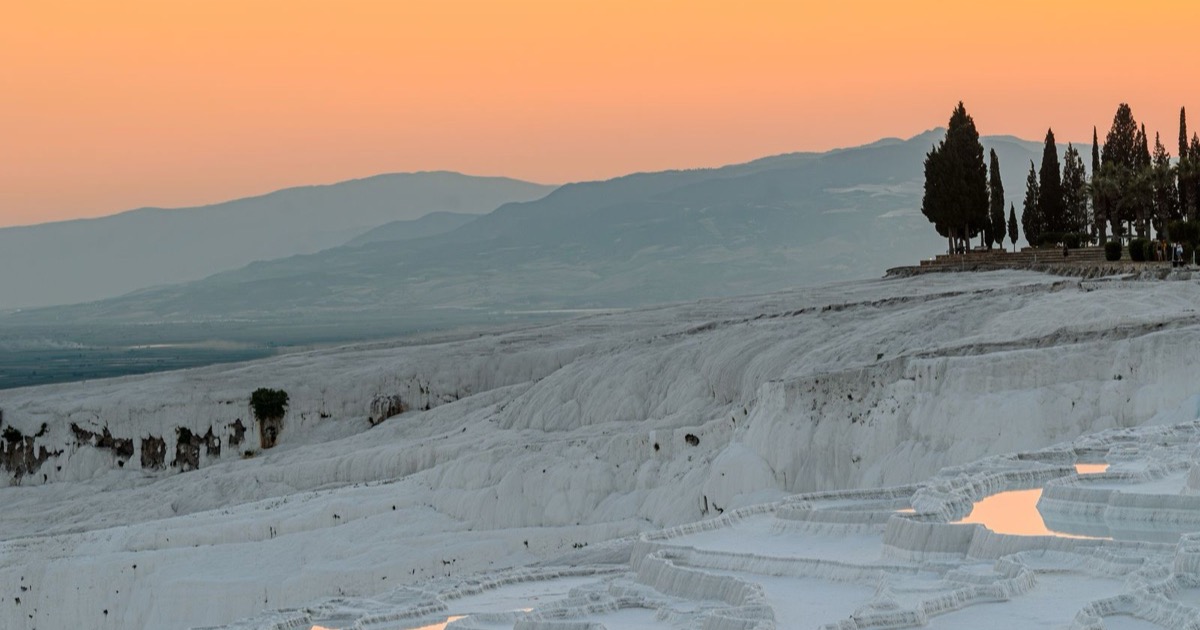

Travel photographers looking for a fresh challenge will find the Pamukkale photography guide 2026 an essential resource for planning their next shoot.
Travel photographers looking for a fresh challenge will find the Pamukkale photography guide 2026 an essential resource for planning their next shoot. The region’s stark white travertine terraces and turquoise thermal pools create a visual contrast that rewards careful timing and technical preparation. With updated climate data for 2026, you can now schedule sessions around the most favorable light and weather conditions. This guide walks you through the critical decisions that turn a good shot into a memorable image.
What is the best time of day to photograph Pamukkale’s white terraces?
The terraces reveal their full texture during the golden hour, when the low sun casts warm highlights on the calcium deposits while shadows define the intricate steps. Arriving about 30 minutes before sunrise allows you to capture the first rays glimmering on the water, and a second window opens roughly an hour after sunset for a soft, cool glow. During these periods the contrast between the white stone and the sky is most pronounced, reducing the need for extreme exposure compensation.
Midday sun can wash out detail, but it also offers a unique opportunity for high‑key compositions if you employ a polarizing filter to cut glare and deepen the blue of the sky. In the summer months, the heat can create shimmering mirages above the pools, adding a subtle atmospheric layer to your frames. Checking the weather forecast Pamukkale for cloud cover will help you decide whether to aim for the soft light of early morning or the dramatic shadows of late afternoon.
How can I capture the sunrise over Pamukkale without crowds?
Early arrival is the most reliable tactic; the main entrance to the terraces opens at 5:30 am in summer, but the site’s perimeter paths are accessible on foot before official opening hours. Position yourself on the upper level of the Hierapolis ruins, where the view overlooks the terraces and the crowd density remains low until the main viewing platforms fill. Bring a lightweight tripod and a remote shutter release to minimize movement and stay out of the way of other early‑morning visitors.
If you prefer a more secluded spot, consider the lesser‑known viewpoint near the ancient Roman theatre. From there you can frame the sunrise against the backdrop of the amphitheater’s stone arches, creating a layered composition that includes both natural and archaeological elements. A small, portable ND filter can help balance the bright sky with the still‑dark terraces, preserving detail in both highlights and shadows.
| Option | Access Time | Key Advantage | Recommended Gear |
|---|---|---|---|
| Upper Hierapolis Platform | 5:45 am | Panoramic view of terraces and pools | Wide‑angle lens, tripod |
| Roman Theatre Viewpoint | 5:30 am (outside gates) | Architectural foreground with sunrise | Standard zoom, ND filter |
| Southwest Cliff Trail | 5:15 am (hiking required) | Minimal foot traffic, dramatic cliffs | Telephoto lens, polarizer |
Which camera settings work best for Pamukkale’s bright white surfaces?
Start with a low ISO (100–200) to keep noise at a minimum, especially when shooting in the soft light of dawn or dusk. Set the aperture between f/8 and f/11 to achieve sufficient depth of field across the terraces while maintaining sharpness. Because the white surfaces reflect a lot of light, a slightly slower shutter speed (1/60 s to 1/125 s) is often sufficient when using a tripod; handheld shots may require a faster speed to avoid motion blur.
Metering can be tricky; spot‑meter the brightest part of the water to prevent blown‑out highlights, then pull exposure compensation down by 1–2 stops. If you have a camera that supports bracketing, capture three exposures (‑1 EV, 0 EV, +1 EV) and blend them in post‑processing for an HDR image that retains detail in both the sky and the terraces. A circular polarizing filter will further reduce glare and enhance the turquoise hue of the pools, while an ND filter becomes useful if you wish to experiment with long exposures during brighter daylight.
What gear should I bring for photographing Pamukkale in 2026?
In 2026 the combination of high‑resolution sensors and improved dynamic‑range performance makes it possible to capture the stark contrast between the white travertine and the turquoise pools without heavy post‑processing. A full‑frame mirrorless body with at least 30 megapixels will give you enough detail to crop into the intricate terrace patterns while preserving texture. Pair it with a fast‑wide lens (24 mm or 28 mm equivalent) to emphasize the scale of the formations, and a medium‑telephoto (70‑200 mm) for isolating individual pools or the distant ruins. Because the site can become crowded, a lens with a silent autofocus motor helps you stay unobtrusive.
Weather in Pamukkale shifts quickly; mornings are cool and often misty, while afternoons become bright and harsh. Bring a sturdy, weather‑sealed tripod with a quick‑release plate to adapt to changing light. A set of graduated neutral‑density filters is useful for balancing the bright sky against the reflective water during sunrise and sunset. Finally, pack spare batteries (the cold can reduce capacity) and high‑capacity memory cards, as the 4K video mode on many 2026 cameras consumes storage rapidly.
| Item | Recommended Specification | Why it matters |
|---|---|---|
| Camera body | Full‑frame mirrorless, ≥30 MP, 5‑stop IBIS | Handles low‑light dawn shots and allows handheld long exposures without blur. |
| Wide‑angle lens | 24 mm f/1.8 or 28 mm f/2.0, weather‑sealed | Captures the sweeping terraces while keeping distortion manageable. |
| Telephoto zoom | 70‑200 mm f/2.8, fast AF | Isolates architectural details of Hierapolis and distant pool reflections. |
| Tripod | Carbon‑fiber, 1.5 kg max load, 3‑section | Stable for long exposures and easy to transport on uneven paths. |
| Polarizing filter | Circular, 77 mm (or matching lens diameter) | Reduces glare on water, deepens sky color, and brings out the white of the travertine. |
| ND/Graduated ND set | ND2, ND4, ND8, 2‑stop GND | Balances exposure between bright sky and shadowed terraces during golden hour. |
| Power & storage | 2‑3 spare Li‑ion batteries, 256 GB UHS‑II cards | Ensures continuous shooting when daylight hours are limited. |
How do I use a polarizing filter to enhance the colors at Pamukkale?
A circular polarizer (CPL) works by rotating the filter until unwanted reflections are minimized and the sky attains richer saturation. Start by attaching the CPL to the front of your lens, then look through the viewfinder or LCD while turning the outer ring. You will notice the water surface darkening and the white terraces gaining subtle depth as the filter aligns with the angle of incoming light. The effect is strongest when the sun is at a 90‑degree angle to the subject, so aim to shoot when the sun is to the side of the terraces rather than directly overhead.
When using a CPL on a tripod, lock the filter rotation after achieving the desired effect; any further movement can shift the balance and require readjustment. Keep in mind that the filter reduces overall light transmission by about one to two stops, so you may need to increase ISO slightly or open the aperture to maintain exposure. In very bright midday conditions, combine the CPL with a neutral‑density filter to keep shutter speeds within a manageable range.
- Rotate the filter until the sky shows the deepest blue without over‑darkening the clouds.
- Observe the water surface; the optimal position will suppress the glossy sheen while preserving natural color.
- Check the white terraces; a slight increase in contrast will reveal their layered texture.
- Use a live histogram to ensure highlights are not clipped after the filter is applied.
- When shooting at sunrise, a CPL can help separate the warm glow from the cool sky, adding dimensionality.
- Combine the CPL with a graduated ND filter for scenes where the horizon is significantly brighter than the foreground.
- After each adjustment, take a test shot and review on a calibrated monitor to confirm color balance.
Where are the hidden photo spots near the Hierapolis ruins?
Beyond the main terrace walkways, a narrow stone stair descends toward the ancient theatre’s lower level. From this vantage point the arches frame the distant pools, creating a natural vignette that works well for compositional experiments. Early morning light filters through the columns, casting soft shadows that add depth without the crowds that gather at the central viewpoint.
A short, less‑frequented path leads to the western side of the Necropolis, where a series of basalt columns stand isolated against the sky. The columns act as leading lines toward the horizon, and the surrounding vegetation often catches the wind, providing subtle motion for long‑exposure shots. Because the trail is not marked on most tourist maps, arriving before the midday heat ensures a quiet environment and clearer air for distant landscape details.
Can I safely fly a drone over Pamukkale and what are the regulations?
Drone operators must obtain a permit from the Turkish Directorate General of Civil Aviation before launching over the UNESCO‑listed area. The application process is fully digital; you will need to submit the aircraft’s registration number, intended flight altitude (maximum 120 m AGL for this zone), and a brief flight plan that outlines the exact coordinates of your take‑off and landing points. Approval is typically granted within 48 hours, provided the request does not conflict with scheduled maintenance of the thermal pools or any official ceremonies at the nearby Hierapolis site.
Even with a permit, several practical restrictions remain. The core terrace field is classified as a “no‑fly buffer” of 200 m radius to protect visitors and preserve the delicate calcium deposits. Pilots are encouraged to launch from the designated parking lot on the western side, where the terrain is level and the signal is clear. Night flights are prohibited, and any operation during peak tourist hours (09:00–12:00 and 14:00–17:00) may be curtailed to avoid disturbances. Carrying liability insurance is strongly advised, as local authorities can impose fines for violations or accidental damage.
How does the weather in summer versus spring affect photography at Pamukkale?
Spring (April–June) offers a soft, diffused light that reduces harsh shadows on the white terraces, making it easier to capture the subtle gradations of color in the mineral‑rich pools. Temperatures during this period range from 15 °C to 25 °C, and occasional light rain can create reflective surfaces that add depth to long‑exposure shots. The surrounding pine forest begins to leaf out, providing a natural frame that contrasts with the stark limestone.
Summer (July–September) brings stronger solar angles and higher ambient temperatures, often exceeding 35 °C. The intense sun can cause over‑exposure on the bright travertine unless you employ a neutral‑density (ND) filter or shoot during the early morning or late afternoon windows. Low humidity in July creates a thin, hazy atmosphere that can soften distant background elements, while August’s occasional thunderstorms offer dramatic cloud formations for silhouette compositions. Planning around the daily temperature swing is essential for protecting equipment and maintaining comfortable shooting conditions.
- Spring’s cooler air improves battery performance, extending shoot time.
- Summer’s strong sun necessitates higher ISO or ND filters to preserve detail.
- Morning mist in April can add a dreamy veil to wide‑angle frames.
- July’s low humidity reduces water vapor, sharpening distant landmarks.
- August thunderstorms provide dynamic cloud contrast for dramatic skies.
- Spring foliage introduces organic lines that guide the eye toward the terraces.
- Heat‑induced mirage effects in September can be used creatively for abstract reflections.
What composition techniques highlight the contrast between water and travertine?
Leading lines are particularly effective on Pamukkale’s stepped pools. Position yourself at a low angle and align the natural terraces so they converge toward the horizon, drawing the viewer’s gaze from the turquoise water up through the layered limestone. Incorporating a foreground element—such as a weathered stone step or a lone visitor—adds scale and reinforces the vertical progression of the scene.
Layered framing can emphasize the textural disparity between the smooth, reflective water and the porous, matte travertine. Use a wide‑angle lens to capture the full expanse of the terraces, then introduce a shallow depth of field by stopping down to f/8–f/11 and focusing on the water surface. The background limestone will retain crisp detail, while the foreground water appears glass‑like, underscoring the juxtaposition of fluidity against solid stone. Adding a polarizing filter at sunrise or sunset can deepen the blue of the pools and suppress glare, further accentuating the visual tension.
How can I edit Pamukkale photos to bring out the turquoise pools?
Start by balancing the white of the travertine terraces with the blue‑green of the thermal pools. A modest increase in the cyan channel (or a selective HSL shift toward teal) will amplify the water’s natural hue without oversaturating the sky. Use a graduated filter to keep the foreground bright while gently darkening the distant hills, which helps the pools stand out as focal points.
Next, address the high‑contrast glare that often washes out detail on the white surfaces. Apply a local exposure reduction or a highlight recovery brush on the brightest spots, then add a subtle clarity boost to the pool edges. Finally, a slight vignette draws the eye inward, emphasizing the layered terraces and the shimmering water below.
Are there guided photography tours available at Pamukkale?
Local operators now offer day‑long photography tours that align with the 2026 astronomical data for optimal lighting. Guides provide transport to sunrise points on the western ridge, a walk through the Hierapolis ruins for architectural contrast, and a sunset session on the terraces where the low angle light accentuates texture. Most tours include a brief briefing on site regulations, such as tripod usage and drone restrictions.
Many tours also arrange a short workshop on‑site, covering composition techniques specific to Pamukkale’s layered landscape. Participants receive a printable itinerary with GPS coordinates for the top five shooting spots, plus a list of nearby cafés where you can back‑up files and recharge batteries before the evening shoot.
Sources & Further Reading
Frequently Asked Questions
When is the peak season for photography at Pamukkale?
The most reliable light for dramatic images occurs from late April through early October. During these months the weather is generally clear, and the longer daylight hours give you multiple windows for sunrise and sunset shots. Early spring can also provide soft pastel skies, while late summer offers the strongest turquoise tones in the pools.
Do I need a permit to photograph the terraces?
A standard visitor ticket covers non‑commercial photography on the terraces and in the ancient city. If you plan to sell the images or use them for professional publications, you must apply for a commercial permit through the local heritage authority. The process is straightforward and can be completed online before your arrival.
Is it allowed to use a tripod on the Pamukkale terraces?
Tripods are permitted in most open areas of the terraces, but they are prohibited inside the Hierapolis museum spaces and near the thermal pools for safety reasons. When using a tripod on the terraces, keep the legs short and avoid blocking foot traffic, especially during peak visitor times.
What is the best lens for capturing the wide landscape of Pamukkale?
A wide‑angle zoom covering 16‑35 mm on a full‑frame sensor works well for encompassing the sweeping terraces and the distant horizon. For tighter compositions of the pools or architectural details, a 50‑mm prime provides a natural perspective with minimal distortion. If you carry a telephoto, reserve it for distant shots of the surrounding mountains.
How can I avoid glare on the white travertine in my photos?
Use a circular polarizing filter to cut reflected sunlight and deepen the contrast between the white stone and the shadows. Position the filter so the rotation aligns with the sun’s angle, usually around 30‑45 degrees off‑axis. If a polarizer is not available, shoot during the golden hours when the sun is lower, which naturally reduces harsh reflections.
Are there any restrictions on drone usage at Pamukkale?
Drones are allowed only in designated zones outside the immediate terrace area and the archaeological site. You must register your drone with the Turkish Civil Aviation Authority and obtain a temporary flight permit from the local tourism office. Flights are prohibited during crowded periods and within a 500‑meter radius of the thermal pools.
What local resources are available for real‑time weather updates?
The Pamukkale visitor center provides an electronic board with hourly forecasts, and several cafés display a live weather widget on their screens. For more detailed data, the national meteorological service offers a free mobile app that includes UV index, wind speed, and cloud cover—information that can help you fine‑tune exposure settings on the fly.
How can I protect my equipment from the humidity of the pools?
Carry a microfiber cloth and a silica‑gel packet in your camera bag to absorb excess moisture after shooting near the pools. A weather‑sealed lens and a rain cover for the camera body add an extra layer of protection. When possible, let the gear dry in a shaded area before packing it away for the day.
What are the nearest accommodation options for photographers?
Several boutique hotels and guesthouses sit within a short walk of the terraces, offering early‑morning access before the crowds arrive. Look for places that provide secure storage for camera gear and a reliable Wi‑Fi connection for uploading files. Many establishments also have a rooftop terrace that serves as a convenient spot for reviewing images at sunset.
Plan your shooting schedule around the recommended light windows, keep your gear protected from the mineral‑rich water, and take advantage of the local guides who know the subtle nuances of the site. With a little preparation, Pamukkale’s unique landscape will reward your effort with striking, unforgettable images.
Plan your trip
Book Istanbul attraction tickets
Skip-the-line tickets and guided tours for Istanbul's top sights, with mobile tickets and flexible cancellation.
See tickets on TiqetsWe may earn a commission from bookings made through this link, at no extra cost to you.
Reviewed by our editor for Türkiye & the Eastern Mediterranean
Elif DemirTürkiye & Eastern Mediterranean Editor
Travel writer covering Türkiye and the Eastern Mediterranean, from Istanbul's old city to the Aegean coast.
More articles by Elif Demir →