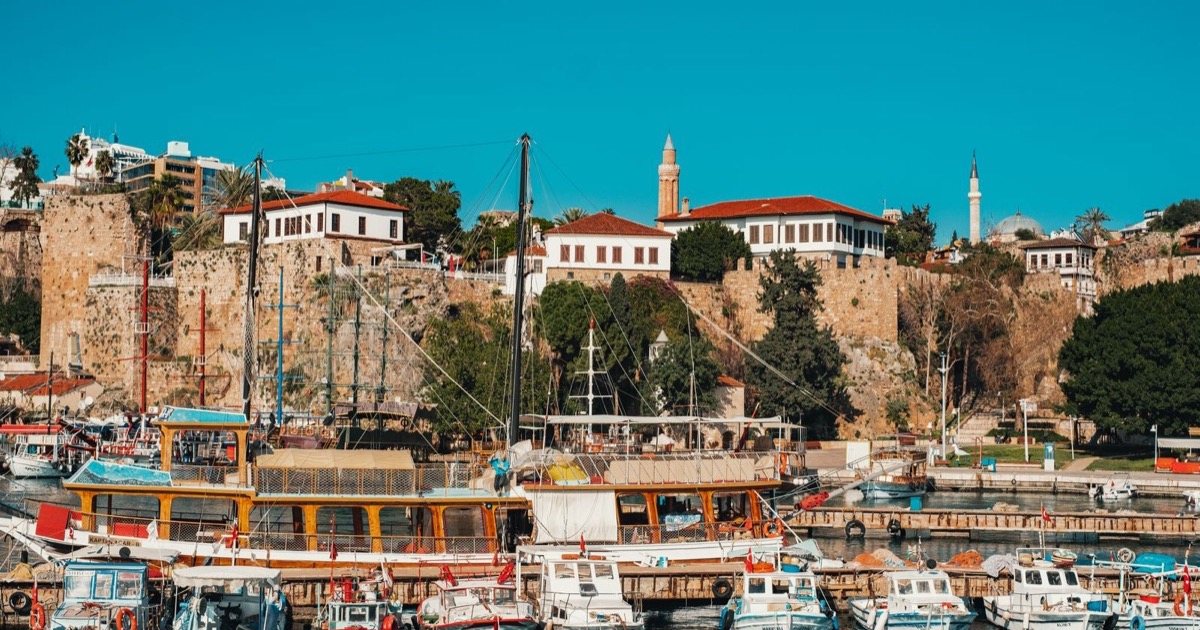

Antalya’s Kaleiçi old town holds a network of quiet corners that most visitors miss, offering a glimpse into daily life that feels untouched by the typical tourist flow.
Antalya’s Kaleiçi old town holds a network of quiet corners that most visitors miss, offering a glimpse into daily life that feels untouched by the typical tourist flow. Exploring these Kaleiçi hidden local spots lets you hear the clink of coffee cups in centuries‑old courtyards and see street art that only locals seem to notice. The 2026 AR tour, powered by LiDAR maps, points out many of these places in real time, making it easier to wander off the main promenade. With each step you’ll discover why Kaleiçi remains a favorite among those who prefer the authentic rhythm of the city.
What hidden cafés do locals recommend in Kaleiçi?
One beloved spot sits behind a modest wooden door on a narrow lane near the historic harbor, where the owner roasts beans on a copper pan and serves Turkish coffee with a delicate layer of foam. The café’s interior retains original Ottoman tiles, and the menu includes a seasonal pistachio‑infused brew that reflects the region’s agricultural heritage. Patrons often linger on the small balcony, watching the street’s gentle flow while sipping the strong, aromatic drink.
Another tucked‑away venue is located above a small artisan shop that sells hand‑woven textiles. Its upstairs seating area is bathed in filtered sunlight, creating a perfect backdrop for reading a newspaper or chatting with locals. Here the emphasis is on freshly baked simit paired with homemade jams, and the staff frequently recommend trying the rosemary‑olive oil dip, a nod to the nearby olive groves.
Which secret alleyways lead to the best photo opportunities in Antalya’s old town?
The first passage, known locally as “Sultan’s Way,” winds between two rows of restored Ottoman houses, each painted in soft pastel hues. Early morning light filters through the arches, casting long shadows that highlight the intricate wooden shutters and the occasional blooming bougainvillea. Photographers appreciate the contrast between the stone walls and the vibrant street life that unfolds quietly along the path.
A second lane, called “The Lantern Passage,” is famed for its vintage lanterns that still hang from the ceiling beams. At dusk, the amber glow creates a warm ambience, perfect for capturing intimate street scenes. The alley leads to a small courtyard where a centuries‑old fountain provides a reflective surface for creative compositions.
| Alleyway | Lighting | Key Feature | Access |
|---|---|---|---|
| Sultan’s Way | Soft morning sun | Pastel‑colored Ottoman façades | Easy from main square |
| The Lantern Passage | Evening amber glow | Historic lanterns & fountain | Hidden behind a market stall |
| Olive‑Tree Lane | Midday bright | Ancient olive trees lining the path | Requires a short climb |
Where can I find authentic Turkish street food away from the tourist crowds in Kaleiçi?
Beyond the bustling market, a modest stall near the old city walls offers freshly grilled fish sandwiches wrapped in flatbread, seasoned with locally sourced herbs and a squeeze of lemon. The vendor prepares each portion on a small charcoal grill, allowing the scent of the sea to mingle with the spices. Regulars often comment on the crispness of the fish and the subtle smokiness that sets it apart from the more commercial options.
Further along a quiet side street, a family-run cart serves “midye dolma” – mussels stuffed with spiced rice and herbs. The preparation is done in view of the customers, and the dish is typically enjoyed with a glass of ayran, providing a refreshing balance to the savory flavors. This spot remains largely unknown to large tour groups, making it a reliable place for a genuine taste of the region’s street cuisine.
What historic Ottoman houses are open for visitors but remain under the radar?
The narrow lanes of Kaleiçi shelter several Ottoman-era residences that have escaped the typical tourist circuit. One such house, a modest stone structure dating from the late‑17th century, retains its original wooden ceiling beams and a small courtyard shaded by ancient olive trees. Inside, rooms are arranged around a central hearth, and period furnishings illustrate daily life for a merchant family. Guided tours are offered in small groups, allowing visitors to explore the private chambers without the crowds that dominate the larger museums.
A second example is a two‑storey townhouse built shortly after the 1720s, notable for its intricate hand‑painted tiles and a rare collection of handwritten ledgers documenting trade across the Mediterranean. The owners have opened the upper floor to the public on Wednesdays and Saturdays, while the ground level continues to operate as a family‑run atelier producing hand‑woven textiles. Both houses provide a glimpse into the architectural nuances and social customs that shaped Ottoman Antalya, yet they remain largely unknown to the average traveler.
| House | Year Built | Notable Feature | Visiting Hours | Entry Fee |
|---|---|---|---|---|
| Stone Merchant Residence | circa 1680 | Original wooden ceiling beams & olive‑tree courtyard | Tue‑Fri 10:00‑16:00 | Free (donations welcome) |
| Tile‑Adorned Townhouse | circa 1725 | Hand‑painted Iznik tiles & historic trade ledgers | Wed & Sat 11:00‑15:00 | 5 TL |
| Family Weaving House | late 1700s | Live textile weaving demonstrations | Thu‑Sun 09:30‑14:30 | 3 TL |
| Riverbank Konak | early 1800s | Restored garden with period fountains | Mon‑Fri 10:30‑17:00 | 4 TL |
| Upper Bazaar Villa | circa 1750 | Original mahogany doors with brass fittings | Sat & Sun 10:00‑16:00 | Free |
How does the new AR heritage tour enhance the experience of Kaleiçi’s hidden sites?
In March 2026 the Antalya Cultural Heritage Authority launched an augmented‑reality (AR) platform in partnership with the start‑up HeritageLens. The system overlays historically accurate 3‑D reconstructions onto surviving walls, allowing users to visualize how a courtyard once looked when its garden was in full bloom or how a merchant’s shop displayed imported ceramics. By scanning a QR code placed discreetly near each point of interest, visitors can toggle between present‑day views and period‑accurate scenes, gaining context that static plaques cannot provide.
The AR tour also incorporates audio narratives recorded by local historians, offering multilingual commentary that adapts to the visitor’s pace. Because the platform runs on standard smartphones, there is no need for additional hardware, and the experience remains unobtrusive to the surrounding environment. Early feedback suggests that the technology encourages longer stays at lesser‑known locations, as travelers become eager to uncover each digital layer.
- Visual reconstruction of original façade colors and decorative motifs.
- Interactive timelines that show architectural changes across centuries.
- Contextual stories about the families who inhabited each house.
- Guided “quest” mode that rewards users with virtual stamps for each site visited.
- Integration with public transport maps to suggest efficient routes.
- Option to switch to “archaeologist view” that reveals hidden structural elements.
- Real‑time translation of audio commentary into several languages.
Which local markets in Kaleiçi sell traditional crafts that tourists often miss?
Beyond the well‑trodden souvenir stalls, Kaleiçi hosts a series of small markets where artisans continue practices passed down through generations. The Saturday market on Çırağan Street specializes in hand‑carved wooden boxes, each featuring motifs inspired by Ottoman calligraphy. These items are produced on site, allowing buyers to watch the carving process and request custom inscriptions. Nearby, a narrow alley near the old hammam houses a cooperative of women who weave kilim rugs using natural dyes derived from local plants; their designs incorporate regional symbols that are rarely found in mass‑produced textiles.
Another overlooked venue is the early‑morning bazaar near the ancient city walls, where metalworkers display intricately forged copper tea sets and silver filigree jewelry. The craftsmen often engage visitors in brief demonstrations, explaining the traditional hammering techniques that have remained unchanged for centuries. By exploring these markets, travelers not only acquire authentic pieces but also support the livelihoods of families dedicated to preserving Antalya’s artisanal heritage.
What are the quiet waterfront spots in Kaleiçi for sunset views?
The small promenade that runs along the ancient harbor offers a calm setting where the Mediterranean light softens over the old stone walls. Early‑evening walkers can pause near the low‑rise Ottoman warehouses that have been converted into cafés, allowing unobstructed sightlines toward the western horizon.
A short detour down one of the narrow side alleys leads to a modest pier tucked behind the historic yacht club. Because it is off the main tourist flow, the area remains relatively silent, and the water’s surface often mirrors the colors of the setting sun. Bring a cup of traditional Turkish coffee from a nearby local spot to enjoy the view while the city’s lights begin to flicker.
Where can I discover boutique artisan shops that are favored by Antalya residents?
Kaleiçi’s network of narrow streets hides several family‑run workshops that specialize in handcrafted goods. These stores tend to attract locals looking for authentic pieces rather than souvenir‑type items. Many are located in restored historic Ottoman houses, adding an extra layer of cultural context to the shopping experience.
Recent integration of the LiDAR heritage map of Antalya into the city’s AR tour allows visitors to point their devices at a façade and instantly receive information about the shop’s history, the artisans behind the work, and any ongoing demonstrations. This technology makes it easy to locate the most appreciated venues without wandering aimlessly.
- Handwoven textiles and kilims produced on looms that have been in the same family for generations.
- Artisan copperware, including intricately engraved plates and tea sets, crafted in a workshop that follows Ottoman techniques.
- Ceramic studios where each piece is hand‑painted with motifs inspired by the Mediterranean coast.
- Leather goods such as belts and sandals, stitched using traditional methods passed down through apprenticeships.
- Spice blends and herbal teas packaged in reusable glass jars, sourced from nearby farms.
- Independent bookshop focusing on regional literature, poetry, and photography of Antalya’s cultural heritage.
- Boutique jewelry featuring locally mined stones set in designs that echo the city’s architectural details.
What lesser‑known museums or cultural centers are tucked away in Kaleiçi?
One modest museum occupies a restored Ottoman house on a side street near the old bazaar. The collection focuses on daily life in Antalya during the 19th century, displaying household objects, clothing, and photographs. The building itself is part of the exhibit, offering insight into the architectural features of the period.
Another venue, a cultural center housed in a former caravanserai, hosts rotating exhibitions of contemporary Turkish art alongside workshops on traditional crafts. The center participates in the Antalya AR tour, providing visitors with augmented‑reality overlays that explain the historical significance of each room.
Finally, a small heritage office near the city walls maintains the LiDAR heritage map of Antalya. While not a museum in the conventional sense, it offers interactive kiosks where guests can explore digitized layers of the old town, from ancient Roman foundations to Ottoman street patterns, enriching the understanding of Kaleiçi’s layered past.
Which secluded rooftop bars offer panoramic views of the old town without the crowds?
At the top of a restored 19th‑century mansion on a quiet side street, a modest terrace overlooks the marble roofs of Kaleiçi. The bar keeps a low profile, serving a curated selection of local wines and craft cocktails infused with citrus from nearby orchards. Because the entrance is tucked behind a wooden door and there is no street‑side signage, the venue rarely appears on mainstream itineraries, allowing you to enjoy sunset hues over the ancient walls in relative peace.
A second option sits above a boutique guesthouse perched on the hill that separates the historic core from the modern promenade. The rooftop is accessed via a narrow stairwell and offers a 360‑degree vista that includes the harbor, the Roman harbour breakwater, and the distant Taurus Mountains. Soft lighting and a small menu of mezze plates create an intimate atmosphere, perfect for an evening drink after a day of wandering the maze‑like lanes.
How can I explore the ancient ruins near Kaleiçi that are not listed in typical guidebooks?
Beyond the well‑known Hadrian’s Gate, a short walk eastward leads to a series of Roman-era foundations that once supported a bustling market district. These stone outlines are marked only by low‑lying marble blocks and a few informational plaques installed by the local heritage authority. Bringing a portable water bottle and a pair of comfortable shoes lets you trace the ancient pathways at your own pace, while the occasional stray cat adds a touch of everyday life.
Further north, hidden behind a cluster of ivy‑clad houses, lies the remains of a Byzantine water‑storage complex. The entrance is an unassuming archway that opens onto a cool, shaded courtyard where a partially excavated cistern still holds rain‑water. Visitors can explore the vaulted chambers on foot; the site is not staffed, so it is advisable to arrive early in the morning and respect the quiet atmosphere.
Sources & Further Reading
Frequently Asked Questions
Are there any free walking tours that focus on Kaleiçi’s secret spots?
Yes, the Antalya Cultural Heritage Authority partners with local university students to run complimentary “insider” walks twice a week. These tours start at the central clock tower and wander through lesser‑known lanes, highlighting artisan workshops, forgotten fountains, and micro‑museums. While no payment is required, a modest tip for the guide is appreciated.
What is the best time of day to visit off‑the‑radar cafés in Kaleiçi?
Mid‑morning, between 10 am and 11 am, offers a balance of pleasant light and fewer patrons. At this hour the cafés are just opening, allowing you to enjoy a quiet table on a sun‑dappled patio while the street vendors begin setting up their stalls. Late afternoon can also be rewarding, especially during the cooler months, when the terraces fill with locals winding down.
Do I need a reservation to enter the lesser‑known museums in Antalya’s old town?
Most of the small, privately run museums operate on a first‑come, first‑served basis and do not require advance booking. However, a handful of exhibition spaces that host temporary art shows limit daily visitor numbers to preserve the environment; for those, a quick phone call or a message via the museum’s social media page a day ahead secures entry.
How can I use the AR heritage app to discover hidden locations in Kaleiçi?
The AR platform released in March 2026 overlays historical reconstructions onto the present‑day streets when you point your phone’s camera at designated markers. After downloading the free app, enable location services and select the “Secret Paths” layer. The app will guide you to points of interest such as a 4th‑century basilica foundation and a medieval watchtower that are otherwise easy to miss.
Is it safe to explore the narrow alleys of Kaleiçi after dark?
Generally, the old town remains well‑lit and frequented by residents and tourists into the evening, especially near the main squares and waterfront. Stick to the main thoroughfares after sunset, keep an eye on your belongings, and consider joining a guided night walk if you plan to venture into the quieter backstreets.
What local dishes should I try at off‑the‑radar restaurants in Kaleiçi?
Look for establishments that serve freshly caught Mediterranean fish grilled with locally pressed olive oil, accompanied by a side of meze featuring marinated artichokes and sun‑dried tomatoes. Another specialty is a slow‑cooked lamb stew infused with pomegranate molasses, a flavor profile that reflects the region’s agricultural heritage.
Can I find parking near the off‑the‑beaten‑path attractions in Kaleiçi?
Street parking is limited, but several municipal lots sit on the perimeter of the historic district. From these lots, a short walk of five to ten minutes leads to the quieter attractions such as the Byzantine cistern and the Roman market foundations. Early arrival, especially on weekdays, increases the likelihood of securing a spot.
Are there any guided tours that specialize in Kaleiçi’s hidden cultural heritage?
Several boutique agencies offer thematic tours focusing on artisan workshops, forgotten religious sites, and Ottoman‑era domestic architecture. These tours typically limit groups to ten participants, allowing the guide to provide detailed commentary and answer questions about the subtle details that larger tours overlook.
What etiquette should I follow when visiting local artisan workshops in Kaleiçi?
Ask permission before photographing the interior or the craftspeople at work, and avoid touching delicate items unless invited. It is courteous to acknowledge the artisans with a brief greeting in Turkish, such as “Merhaba,” and to consider purchasing a small handmade item as a token of appreciation for their skill.
When planning your day, map out the rooftop venues and off‑the‑radar sites early, allowing flexibility for unexpected discoveries that often make a visit to Kaleiçi truly memorable.
Plan your trip
Book Istanbul attraction tickets
Skip-the-line tickets and guided tours for Istanbul's top sights, with mobile tickets and flexible cancellation.
See tickets on TiqetsWe may earn a commission from bookings made through this link, at no extra cost to you.
Reviewed by our editor for Türkiye & the Eastern Mediterranean
Elif DemirTürkiye & Eastern Mediterranean Editor
Travel writer covering Türkiye and the Eastern Mediterranean, from Istanbul's old city to the Aegean coast.
More articles by Elif Demir →