
Travelers drawn to the surreal white terraces of Pamukkale often discover that the real crown of the landscape lies in the ancient stones of Hierapolis.
Travelers drawn to the surreal white terraces of Pamukkale often discover that the real crown of the landscape lies in the ancient stones of Hierapolis. This Hierapolis ancient theatre guide reveals why the Roman theatre perched above the thermal springs continues to intrigue scholars and sightseers alike. From its sophisticated stage machinery to its dramatic hillside setting, the venue offers a glimpse into a world where architecture, performance, and healing waters intersect.
What makes the Hierapolis ancient theatre unique compared to other Roman theatres?
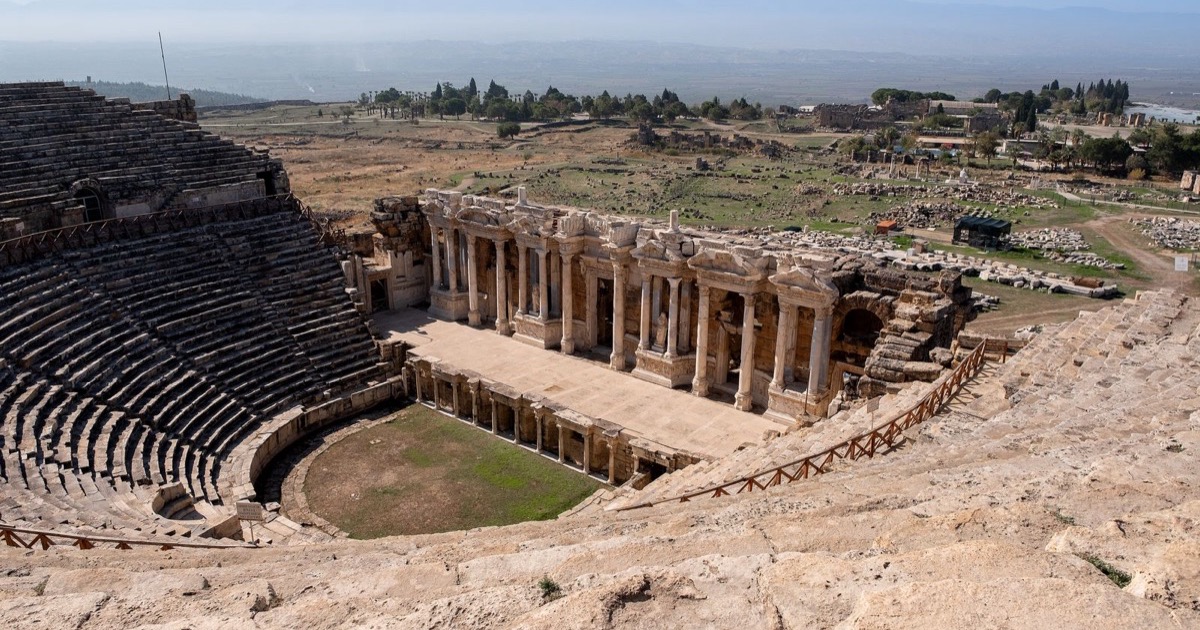
The Hierapolis theatre stands on a limestone terrace roughly 200 metres above the modern town, granting audiences a panoramic view of the travertine cascades below. Unlike many coastal or urban Roman theatres, its design exploits the natural slope, allowing the orchestra and seating to blend seamlessly with the hill’s contour. This integration creates an acoustic environment praised for its clarity even at the farthest rows.
Archaeological research in the early 2020s uncovered a complex system of stage machinery dating to the 2nd‑century CE. Wooden pulleys, counterweights, and a revolving platform—elements rarely preserved elsewhere—suggest that productions could feature rapid scene changes and elaborate special effects. Scholars still debate the exact mechanisms, but the surviving foundations indicate a level of engineering sophistication comparable to the grandest theatres of the Empire.
Seating arrangement also departs from the typical radial pattern. The cavea is divided into three horizontal tiers, each aligned with a distinct social class, yet the curvature follows the natural curve of the hillside rather than a perfect semicircle. This adaptation not only maximizes capacity—estimated at 12,000 spectators—but also respects the steep terrain, a solution rarely seen in other Roman venues.
How can I access the Hierapolis theatre within the Pamukkale archaeological site?
The theatre is included in the general Pamukkale‑Hierapolis ticket, which grants entry to all ruins on the ridge. Visitors may approach the site through three primary entrances, each offering a slightly different experience. The Main Gate, located near the parking lot, provides the shortest walk to the theatre but can become crowded during peak hours. The North Gate enters through the ancient necropolis, allowing a quieter stroll past tombs before reaching the performance space. Finally, many travelers opt for a guided tour that begins at the visitor centre and includes commentary on the theatre’s history and architecture.
All routes are well signposted, and the paths are paved with stone steps that accommodate most mobility levels. For those with limited stamina, a shuttle service runs between the main parking area and the upper ridge during the high season, dropping passengers within a short walk of the theatre’s entrance.
| Access Option | Distance from Parking | Cost (incl. ticket) | Guided Commentary | Typical Time Needed |
|---|---|---|---|---|
| Main Gate | ≈300 m | Standard entry fee | Self‑guided | 30‑45 min walk |
| North Gate (Necropolis) | ≈500 m | Standard entry fee | Self‑guided | 45‑60 min walk |
| Guided Tour | Varies (pick‑up at centre) | Standard fee + tour surcharge | Professional guide | 90‑120 min total |
What are the opening hours and ticket prices for the Hierapolis ancient theatre in 2026?
During the tourist season (April – October) the site opens at 08:00 and closes at 19:00, with the last entry permitted one hour before closing. In the off‑season (November – March) hours shift to 09:00 – 18:00, reflecting shorter daylight periods. The theatre itself follows the same schedule, as it is part of the protected archaeological complex.
Ticket pricing for 2026 remains consistent with the broader Pamukkale‑Hierapolis admission structure. Adults pay a standard fee, while reduced rates apply to students, seniors, and children under 12. A combined ticket that includes the museum, the ancient pool, and the theatre is slightly cheaper than purchasing each entry separately. Group discounts are available for parties of ten or more, and free entry is granted to holders of a UNESCO World Heritage pass.
Visitors should verify any seasonal adjustments or special event closures before arrival, as occasional performances or conservation work may temporarily restrict access to the stage area.
Which guided tours include a visit to the Hierapolis theatre and its backstage secrets?
Several operators on the Pamukkale plateau design itineraries that combine the iconic white terraces with a deep dive into the Roman theatre’s hidden mechanisms. The most popular choices are day‑long packages that start early, guide visitors through the travertine pools, and finish with a dedicated walkthrough of the stage area where ancient engineers once manipulated scenery.
Travel agencies based in Denizli, as well as a handful of boutique guides operating out of the Pamukkale town centre, all provide a “backstage pass” element. This usually involves a short climb to the theatre’s sub‑level chambers, where a guide explains the pulley systems, trapdoors, and the original orchestra pit layout. Some tours also include a brief demonstration using replica ropes to illustrate how actors could have vanished from the stage.
| Tour Operator | Duration | Highlights | Price Range |
|---|---|---|---|
| Denizli Heritage Tours | 9 hours | Full Pamukkale walk, Hierapolis necropolis, theatre backstage access, local lunch | Mid‑range |
| Pamukkale Explorer | 7 hours | Travertine terraces, theatre machinery briefing, optional hot‑spring dip | Budget |
| Classic Anatolia Experiences | 10 hours | Private guide, detailed stage‑mechanism workshop, sunset view from the theatre’s upper tier | Premium |
What is the history behind the stage machinery of the Hierapolis theatre?
The theatre was erected in the early second century CE during a period of rapid urban development in the Greco‑Roman city of Hierapolis. Architects adopted the standard Roman “scaenae frons” design, but the local builders incorporated a series of sophisticated devices that allowed rapid scene changes and dramatic effects. Archaeological surveys in the 2020s uncovered remnants of wooden counterweights, bronze fittings, and a network of vertical shafts that linked the stage floor to the orchestra pit.
Recent interdisciplinary research, combining laser scanning with material analysis, confirmed that the machinery was not merely decorative. The system could raise and lower platforms, create simulated storms with water channels, and even produce sudden appearances through concealed elevators. Such capabilities placed Hierapolis among the most technically advanced provincial theatres of the Roman world.
- Vertical hoists operated by a series of pulleys and counterweights, enabling swift backdrop swaps.
- Trapdoors embedded in the stage floor, used for surprise entrances and exits.
- Hydraulic channels that could release water onto the stage for mythic sea scenes.
- Rotating platform (turntable) allowing actors to face different audience sections without moving sets.
- Acoustic shells built into the scaenae frons to amplify sound from the orchestra pit.
- Bronze fittings that survived corrosion, providing clues to the original load capacities.
- Evidence of a control room behind the stage where stagehands coordinated the mechanisms.
How do the travertine terraces influence the experience of visiting the theatre?
The limestone terraces rise sharply behind the ancient city, creating a natural amphitheater that frames the Roman theatre. As visitors ascend from the white pools to the theatre’s entrance, the contrast between the soft, mineral‑rich ground and the solid stone of the performance space sharpens the sense of stepping back in time. The terraces also act as a climatic buffer, moderating temperature fluctuations and offering cooler breezes during the hot summer months.
From the theatre’s upper tier, the view sweeps across the cascading white formations, providing a panoramic backdrop that would have impressed Roman spectators. The visual relationship between the cultivated urban area and the surrounding natural wonder reinforces the idea that Hierapolis was designed as a sanctuary where health, leisure, and culture intersected.
Walking the stone pathways that connect the terraces to the theatre’s gate, travelers encounter subtle elevation changes that echo the original Roman road network. These gentle slopes help preserve the acoustic quality of the venue, allowing the faint echo of ancient performances to be imagined even today.
What are the best times of year to explore the Hierapolis ancient theatre and avoid crowds?
The theatre reaches its most comfortable climate during the shoulder months of late April through early June and again from mid‑September to early November. During these periods daytime temperatures hover between 18 °C and 26 °C, allowing visitors to linger on the stone seats without the oppressive heat that characterises midsummer. Rainfall remains scarce, so the stone surfaces stay dry and the acoustic qualities of the venue are fully appreciable.
Tourist flow peaks in July and August when school holidays drive large groups to Pamukkale’s terraces. Arriving early—before the official opening hour of 08:30 AM—provides a quieter experience, as most guided tours have not yet assembled. Conversely, the winter months (December to February) see fewer visitors, yet occasional frost can make the limestone steps slippery, and some of the on‑site interpretive panels are temporarily removed for preservation.
Are there any accessibility options for visitors with limited mobility at the Hierapolis theatre?
The site has undergone modest upgrades to accommodate travelers who require assistance. A gently sloping ramp has been installed at the main entrance on the western side, linking the parking area to the lower tier of the auditorium. This ramp conforms to international gradient standards, enabling wheelchair users to reach the seating zone without excessive effort.
In addition to the ramp, the management provides a set of portable seating platforms that can be positioned on the stone rows upon request. Staff members are trained to assist with the placement and removal of these platforms, ensuring that visitors with limited mobility can enjoy the view of the stage and the surrounding landscape.
- Wheelchair‑friendly ramp at the western gate (grade 1:12).
- Portable seating platforms available on‑site, free of charge.
- Handrails installed along the primary staircases of the lower tier.
- Audio guide devices with volume control for visitors with hearing impairments.
- Clear signage in multiple languages indicating accessible routes.
- Restroom facilities adapted for wheelchair access located near the ticket office.
- Staff assistance on demand; request at the information desk.
What nearby attractions should I combine with a visit to the Hierapolis ancient theatre?
The ancient theatre sits atop the limestone terrace that crowns Pamukkale’s famous travertine cascades. A short walk downhill leads to the thermal pools, where the mineral‑rich waters continue to flow over the white terraces. The contrast between the cultivated stone seats of the theatre and the natural white terraces creates a compelling visual narrative that many visitors find rewarding.
Beyond the terraces, the necropolis stretches along the ridge, offering a collection of sarcophagi, mausoleums, and early Christian tombs. The site is compact enough to explore on foot in an hour, yet each monument provides a distinct glimpse into the funerary customs of the Roman period. For those interested in the broader urban layout, the Great Bath—once a Roman‑Greek spa—lies a few minutes’ walk from the theatre and retains the original marble basins fed by the hot springs.
Finally, the Hierapolis Museum, housed in the former Roman agora, presents artifacts recovered from the surrounding excavations, including marble statues, inscriptions, and fragments of stage scenery. Allocating an additional hour to the museum rounds out a comprehensive cultural itinerary, linking performance space, sacred water, burial practices, and material culture in a single day.
What safety and preservation measures should visitors be aware of at the Hierapolis site?
The ancient theatre sits on a limestone platform that can become slippery after rain or when the mineral springs mist the stones. Wear sturdy, closed‑toe shoes with good grip, and consider a light rain jacket if you are traveling in the wetter months. Staff frequently apply a subtle anti‑slip coating to high‑traffic steps, but staying attentive to the ground remains the best protection.
Preservation crews limit the number of people allowed inside the auditorium at any one time. If you arrive during peak hours, expect a brief wait while a guide coordinates entry. Respect the rope barriers and signage; they are placed to keep both visitors and fragile marble elements safe.
Food, drink, and smoking are prohibited within the theatre’s perimeter. Carry a reusable water bottle and empty it before entering, as the site’s drainage system is designed to prevent any contamination of the surrounding archaeological layers. Dispose of waste only in the bins provided at the entrance.
How can I capture the best photos of the Hierapolis theatre and its surroundings?
Early morning light casts a warm glow on the stone seats and highlights the subtle color variations of the travertine terraces below. Position yourself on the lower tier of the theatre to include both the tiered seating and the distant white cascades in a single frame; a wide‑angle lens works well for this perspective.
Mid‑day shadows can be harsh, so consider using a polarizing filter to reduce glare on the limestone and bring out the texture of the ancient masonry. If you prefer a dramatic composition, crouch near the stage’s edge and shoot upward, allowing the vaulted backdrop to frame the performers’ former platform.
Flash photography is discouraged because it can damage pigments that may still be present on the stone. Instead, increase your ISO modestly and rely on the natural illumination. A tripod is permissible on the outer walkways, but avoid setting it up on the stone steps themselves.
Sources & Further Reading
Frequently Asked Questions
Is the Hierapolis ancient theatre open year‑round?
The theatre welcomes visitors throughout the calendar year, except for brief closures tied to major restoration projects or extreme weather conditions. During winter months, operating hours may start later in the morning and end earlier in the afternoon. Check the official site or local information desk for any announced interruptions before you travel.
How much does a ticket to the Hierapolis archaeological site cost?
Admission is included in the combined Pamukkale‑Hierapolis ticket, which grants access to the travertines, the ancient city, and the theatre. The price varies slightly between domestic and foreign visitors, and discounts are offered for students, seniors, and groups larger than ten. Online purchase often provides a modest reduction compared with on‑site sales.
Can I see the original stage machinery inside the theatre?
Recent research uncovered remnants of the 2nd‑century stage mechanisms, and a small portion has been reconstructed for display near the orchestra pit. The original gears and pulleys remain in situ, protected behind a low glass barrier that allows observation without risking damage. Guided tours typically include a brief explanation of how the machinery operated during Roman performances.
Are audio guides available for the Hierapolis theatre?
Multilingual audio devices can be rented at the main ticket office for a small fee. The guide offers a narrated walk‑through that describes architectural features, historical anecdotes, and the recent discoveries about the stage equipment. Headphones are provided, and the device can be returned at any exit point within the site.
What is the nearest accommodation to the Hierapolis ancient theatre?
Several hotels and guesthouses line the road that leads from the travertine parking area up to the ancient city’s gate. Most of these establishments are within a ten‑minute walk of the theatre and provide shuttle services during the high season. Choosing a place with a rooftop terrace offers a convenient spot to watch the sunrise over the terraces before heading down to explore.
How long does a typical visit to the Hierapolis theatre take?
Most travelers allocate between one and one and a half hours to explore the auditorium, the stage area, and the surrounding explanatory panels. If you combine the visit with the adjacent necropolis or the Temple of Apollo, you should budget an additional hour. Allow extra time for photo stops, especially during the golden hour.
Is photography allowed inside the theatre?
Visitors may take photographs for personal use, but the use of tripods and external lighting is restricted to protect the stone surfaces. Flash is prohibited, and any commercial photography requires a special permit from the Ministry of Culture and Tourism. Sharing your images on social media is encouraged, provided you credit the site appropriately.
Are there any restrictions on food and drink near the theatre?
Eating and drinking are only permitted in designated areas outside the archaeological perimeter. Small bottles of water are allowed, but they must be sealed and placed in the provided lockers before entering the theatre zone. Vendors located near the entrance sell refreshments, and their waste bins are regularly emptied to keep the site clean.
Can I combine a visit to Pamukkale’s travertines with the Hierapolis theatre in one day?
Yes, the two attractions are designed to be experienced together. The ticket grants access to both the white terraces and the ancient city, and the walking route between them takes roughly fifteen minutes. Starting early at the travertines allows you to descend to the theatre before the midday crowds arrive.
What language tours are offered for the Hierapolis ancient theatre?
Guided tours are available in several major languages, including English, German, French, Russian, and Arabic. Local guides often tailor the narrative to the group’s interests, focusing on architecture, theater history, or the recent archaeological findings. Private tours can be arranged in advance for less common languages or specialized topics.
Plan your visit with a clear sense of timing, keep the preservation guidelines in mind, and you’ll leave the Hierapolis theatre with both vivid memories and striking photographs to share.
Plan your trip
Book Istanbul attraction tickets
Skip-the-line tickets and guided tours for Istanbul's top sights, with mobile tickets and flexible cancellation.
See tickets on TiqetsWe may earn a commission from bookings made through this link, at no extra cost to you.
Reviewed by our editor for Türkiye & the Eastern Mediterranean
Elif DemirTürkiye & Eastern Mediterranean Editor
Travel writer covering Türkiye and the Eastern Mediterranean, from Istanbul's old city to the Aegean coast.
More articles by Elif Demir →