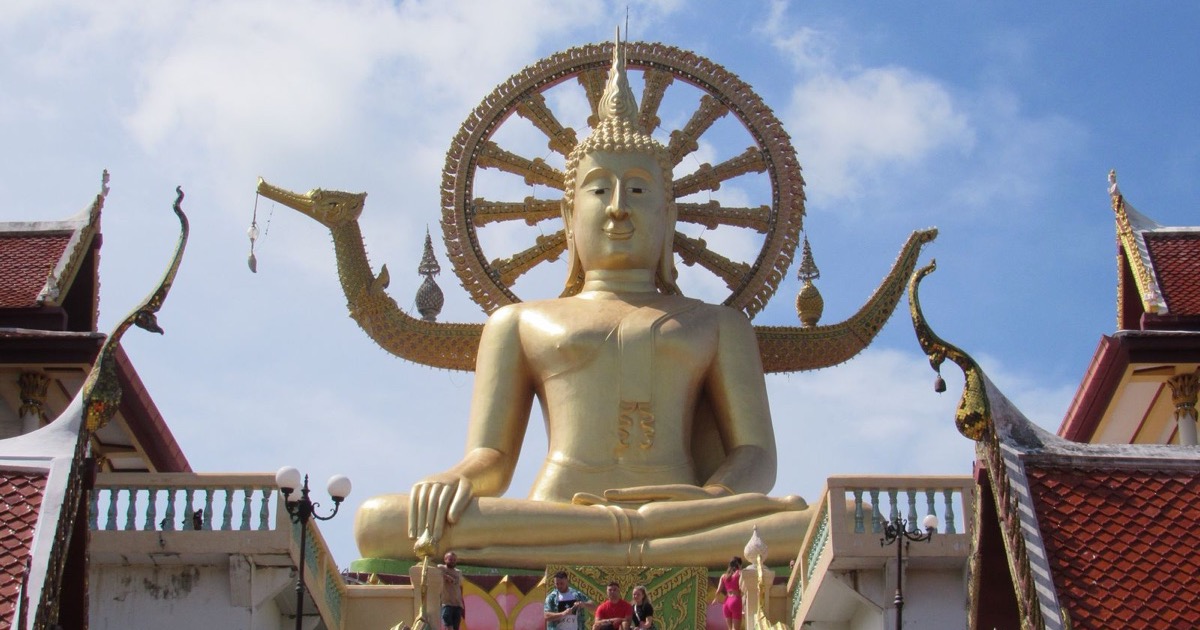

Standing proudly on a small hill overlooking the Gulf of Thailand, the Koh Samui Big Buddha Temple draws both reverence and curiosity. Known locally as Wat Phra
Standing proudly on a small hill overlooking the Gulf of Thailand, the Koh Samui Big Buddha Temple draws both reverence and curiosity. Known locally as Wat Phra Yai, this cultural site on the island blends spiritual significance with striking coastal views. Whether you’re planning a sunrise photo session or a quiet moment of reflection, understanding the temple’s background, optimal visiting times, and proper attire will make your trip smoother and more rewarding.
What is the history behind the Big Buddha Temple in Koh Samui?
The origins of the Koh Samui Big Buddha Temple trace back to the early 1970s when a local monk commissioned the construction of a monumental Buddha statue to symbolize peace and prosperity for the island community. The 12‑metre tall Buddha statue, often referred to as the Buddha statue Koh Samui, was erected in 1972 and quickly became a focal point for both worshippers and travelers.
Over the decades, the temple complex expanded to include a main prayer hall, a small museum of Buddhist artifacts, and a series of smaller shrines dedicated to various deities. The site’s development reflects the broader growth of tourism on the island, yet the temple remains an active place of worship, hosting daily chanting, Buddhist festivals, and community ceremonies. Its presence on the island’s northern coast offers a serene contrast to the busy beachfront resorts.
Today, Wat Phra Yai serves as a gateway for visitors seeking insight into Thai Buddhist traditions while enjoying panoramic views of the sea. The blend of religious function and tourist appeal makes it a unique cultural landmark within the Koh Samui Big Buddha history.
When is the best time of year to visit Wat Phra Yai for clear views?
Choosing the right season can dramatically affect the clarity of the coastal view temple and the overall experience. The dry season, which runs from December to April, typically provides the clearest skies, minimal rain, and calm seas—ideal conditions for photography tips Wat Phra Yai enthusiasts. During these months, the sunrise paints the Buddha statue in soft gold, while the sunset at Big Buddha creates a vivid backdrop against the horizon.
The shoulder months of May and November can also be rewarding. Although occasional showers may appear, they are usually brief, and the reduced tourist crowds allow for a more peaceful visit. Early mornings remain bright, and the island’s lush greenery adds depth to photos, especially when the light filters through the trees surrounding the temple grounds.
| Month | Weather | Crowd Level | View Clarity |
|---|---|---|---|
| December–April | Dry, sunny | Moderate to high | Excellent |
| May | Transitional, occasional rain | Low | Very good |
| June–October | Monsoon, frequent rain | Low | Variable |
| November | End of monsoon, clearing skies | Low | Good |
For those prioritizing minimal crowds and still decent visibility, early May or late November represent the best time to visit Big Buddha Koh Samui. Always check local forecasts, as sudden tropical showers can appear even during the dry months.
What are the dress code requirements for entering the Big Buddha Temple?
Thai temple etiquette is straightforward but essential for respectful entry. Visitors must cover their shoulders and knees; sleeveless tops, shorts, and flip‑flops are not permitted inside the prayer hall. A simple pair of lightweight trousers or a long skirt, combined with a short‑sleeved shirt, satisfies the Big Buddha Koh Samui dress code while keeping you comfortable in the tropical climate.
Footwear should be easy to remove, as you will be asked to take off shoes before stepping onto the inner sanctum. Many travelers bring a pair of sandals that can be slipped off quickly. If you’re traveling with children, ensure they understand the need to dress modestly; many families find it helpful to pack a spare sarong or scarf for quick coverage.
Beyond clothing, the temple donation fee—typically a modest amount placed in the donation box—supports maintenance and religious activities. Observing the silence, refraining from pointing at the Buddha statue, and moving slowly through the grounds further align with Thai temple etiquette and enhance the experience for everyone.
How can I get to Wat Phra Yai using public transportation?
The most common public option is the island’s shared songthaew, a converted pickup truck that runs on a set route and picks up passengers along the way. From Nathon, the administrative centre, board a songthaew heading toward the northern coast; the driver will announce “Big Buddha” or “Wat Phra Yai” as a stop. The ride takes roughly 30‑40 minutes, and the fare is a modest amount payable in cash. Ask the driver to drop you off at the main entrance; the vehicle will usually wait a few minutes for latecomers before continuing.
If you prefer a more structured schedule, the local bus service operated by Samui Bus runs a limited number of trips each day from the central bus terminal near the ferry pier. The route to the temple departs early in the morning, allowing visitors to arrive before the heat intensifies. Tickets can be purchased on board or at the terminal kiosk. For travelers staying in the Chaweng or Lamai areas, a short tuk‑tuk ride to the nearest songthaew stop is often the quickest way to connect to the temple route.
Are there any entrance fees or donations required at the Big Buddha Temple?
Wat Phra Yai does not charge a mandatory entrance fee; the grounds are open to the public at no cost. However, a small donation box sits near the base of the Buddha statue, inviting visitors to contribute toward maintenance and community projects. Contributions are entirely voluntary, and most guests leave a modest amount as a sign of respect.
To help you plan, here are a few practical points:
- Carry exact change in Thai baht; the box accepts coins and small notes.
- If you are traveling with a group, consider pooling donations to make a single, more noticeable offering.
- Donations are not required for photography, but a polite nod to the monks or staff before snapping a shot is appreciated.
- During special festivals, temporary fees may be announced for specific ceremonies; local signage will provide up‑to‑date information.
- Keep receipts if you need documentation for travel expense reports; some tour operators issue a simple acknowledgment.
What should I know about temple etiquette when visiting Koh Samui's Big Buddha?
Respectful behaviour is essential to preserve the sanctity of the site and to ensure a smooth experience for all guests. Dress modestly: shoulders and knees should be covered, and shoes must be removed before entering the inner shrine area. Light, breathable fabrics are advisable given the tropical climate, and a simple sarong or scarf can be purchased nearby if needed.
When moving through the complex, maintain a calm pace and avoid pointing your feet toward Buddha images or altar objects. Speak softly, and keep mobile phones on silent mode. If you wish to make a merit‑making offering, place your donation in the box quietly and bow slightly toward the statue. Photography is permitted in most outdoor spaces, but flash is discouraged inside the main prayer hall, and visitors should refrain from climbing onto railings or stepping onto the stone platform surrounding the statue.
Can I bring children to the Big Buddha Temple and what activities are suitable?
Families with kids will find Wat Phra Yai welcoming, provided they observe the same dress code and quiet demeanor expected of all visitors. Young travelers are often fascinated by the sheer scale of the 12‑metre bronze Buddha and the colorful mosaics that line the stairways. A short, guided walk around the lower platform allows children to spot the smaller guardian statues, the intricate lotus patterns, and the occasional monk offering alms.
Interactive activities are limited, but the temple grounds provide ample space for a gentle scavenger hunt. Parents can ask children to locate the eight directional guardians, count the tiers of the golden spires, or identify the different shades of blue used in the roof tiles. A brief meditation session—simply sitting quietly for a minute while focusing on breath—can be a calming exercise that introduces them to Thai spiritual customs without disrupting the sanctity of the site.
What photography tips help capture the coastal view from the Big Buddha?
The statue sits on a small island jutting into the Gulf of Thailand, offering a natural frame of turquoise water and distant cliffs. To emphasize depth, position the Buddha off‑center using the rule of thirds, allowing the sea to occupy the opposite side of the frame. Early morning light casts a soft golden hue on the bronze, while the water remains calm enough to reflect the statue’s silhouette.
Mid‑day sun can flatten details, so consider using a polarizing filter to reduce glare on the water and enhance the saturation of the sky. When shooting at sunset, a low‑angle perspective from the base of the stairs captures both the Buddha’s profile and the fiery horizon, creating a dramatic contrast between warm and cool tones.
| Time of Day | Light Quality | Suggested Angle |
|---|---|---|
| Sunrise (6:00‑7:30) | Soft, warm, long shadows | Low angle from the shoreline, include silhouettes of fishermen boats |
| Mid‑morning (9:00‑11:00) | Bright, high contrast | Use polarizer, shoot from the upper platform for a straight‑on view |
| Golden Hour (17:30‑19:00) | Warm, diffused, colorful sky | Side view from the stairwell, capture reflections on the water |
What are the opening hours of Wat Phra Yai throughout the year?
The temple operates on a consistent schedule, but minor adjustments occur during Thai public holidays and the Buddhist Lent period. Generally, the gates open at sunrise and close shortly after sunset, allowing visitors to experience both daylight and evening ambience. During the high tourist season (December‑February), staff may extend the closing time by fifteen minutes to accommodate larger crowds.
| Season | Opening Time | Closing Time |
|---|---|---|
| Peak (Dec‑Feb) | 05:30 | 19:15 |
| Mid (Mar‑May, Sep‑Nov) | 06:00 | 18:45 |
| Low (Jun‑Aug) | 06:30 | 18:30 |
Practical Tips for Visiting Koh Samui
- Dress Smartly: Wear clothing that covers shoulders and knees; a light shawl or sarong can be purchased at the entrance if needed.
- Plan Your Arrival: Arrive early to avoid the mid‑day heat and to secure a spot for unobstructed views of the coastline.
- Carry Small Change: Donation boxes accept coins and small bills; having exact change simplifies contributions.
- Stay Hydrated: Bring a reusable water bottle; refill stations are available near the parking area.
- Respect Monks: Keep a respectful distance, refrain from touching any religious objects, and speak softly.
- Use Sunscreen: The open platform offers little shade, so apply sunscreen before climbing the stairs.
- Check Weather Forecast: Coastal visibility can be reduced by sudden rain showers; a clear sky enhances photographic opportunities.
Editor’s Note: The Big Buddha’s location makes it one of the few temples where sunrise and sunset can both be enjoyed without leaving the site. Visitors who time their trip to either extreme will capture distinct moods—tranquil dawn rituals versus vibrant evening lights—adding depth to any travel journal.
Recommended Koh Samui Activities
Frequently Asked Questions About Koh Samui
Do I need to remove my shoes before entering the Big Buddha Temple?
Yes, visitors are required to remove their shoes before stepping onto the temple’s inner precincts. The practice respects the sanctity of the shrine and keeps the marble flooring clean. Shoe racks are positioned at each entrance, and staff will guide you to the appropriate area. You may store your footwear there for the duration of your visit, and you can retrieve them when you leave. Remember to keep socks or foot coverings clean, as they will be visible throughout your tour.
Is there a fee to climb the stairs to the Buddha statue?
There is no admission charge specifically for climbing the stone steps that lead to the seated Buddha. However, the temple operates a modest donation box at the base of the staircase, encouraging contributions for maintenance. Most travelers offer a small amount, typically equivalent to a few Thai baht, as a gesture of gratitude. The donation helps fund cleaning, lighting, and occasional restoration of the Koh Samui Big Buddha Temple’s exterior. If you prefer not to contribute, you can still admire the statue from the viewing platform without ascending the steps.
What is the appropriate clothing for women at Wat Phra Yai?
Women should wear clothing that covers the shoulders and knees when visiting Wat Phra Yai. A lightweight blouse with sleeves and a long skirt or loose trousers are both suitable for the tropical climate. Avoid tank tops, short shorts, or swimwear, as these are considered disrespectful in the sacred space. Many vendors near the temple sell inexpensive sarongs and shawls for travelers who need a quick cover-up. Respectful attire ensures that you can fully appreciate the Koh Samui Big Buddha Temple’s spiritual atmosphere without drawing unwanted attention.
Can I visit the Big Buddha Temple at night?
The main prayer hall closes after sunset, but the outer grounds remain accessible for evening strolls. From dusk until the last lantern is extinguished, the illuminated Buddha silhouette creates a striking visual against the dark sky. Evening visits are quieter, allowing you to experience the site without the daytime crowds. Be aware that some nearby food stalls may close early, so plan your dinner accordingly. Bring a small flashlight or use your phone’s torch to navigate the pathways safely after dark.
Are guided tours available for the Big Buddha Temple?
Several local operators offer guided tours that include the Koh Samui Big Buddha Temple as a key stop. These tours typically provide a bilingual guide who explains the statue’s history, symbolism, and recent restoration efforts. You can book a group tour at most hotels or through reputable travel agencies on the island. For a more flexible schedule, many guides also offer private half‑day packages that combine the temple with nearby attractions. While guides are not mandatory, their insights can deepen your understanding of the cultural context and answer spontaneous questions.
Is photography allowed inside the temple?
Photography is permitted in most outdoor areas of the temple complex, including the garden and the base of the Buddha. Inside the inner shrine, flash photography is prohibited to protect the delicate murals and to maintain a reverent atmosphere. Signs near each hall clearly indicate where cameras are allowed, and staff will politely remind visitors of the rules if needed. If you wish to capture close‑up details of the statue, use natural light and avoid using tripods that could obstruct foot traffic. Respectful photography ensures that future visitors can continue to enjoy the same visual experience.
How long does a typical visit to the Big Buddha Temple take?
Most travelers spend between 45 minutes and an hour exploring the main attractions of the Koh Samui Big Buddha Temple. This timeframe allows for a leisurely walk around the grounds, a brief pause for meditation, and time to read the informational plaques. If you join a guided tour, the visit may extend to 90 minutes to accommodate detailed commentary and questions. Visitors who wish to climb the stairs to the statue’s underside or attend a monk-led chanting session should allocate additional time. Planning a flexible schedule helps you absorb the site’s ambiance without feeling rushed.
The Koh Samui Big Buddha Temple remains a compelling blend of serene spirituality and striking coastal scenery. By observing local customs, respecting dress codes, and allowing ample time for contemplation, you will gain a richer appreciation of its cultural significance. Pair your visit with a nearby market or beach café to round out the day, and you’ll leave with memories that linger long after you depart. Safe travels and enjoy every moment of this iconic island landmark.
Plan your trip
Tours, tickets & activities
Browse and book experiences, attraction tickets and day trips on Klook, with instant confirmation.
Explore experiences on KlookWe may earn a commission from bookings made through this link, at no extra cost to you.
Reviewed by our editor for Asia & the Middle East
Sarah ChenAsia & Middle East Editor
Travel writer covering Southeast Asia, East Asia and the Gulf — temples, street food and modern cities.
More articles by Sarah Chen →