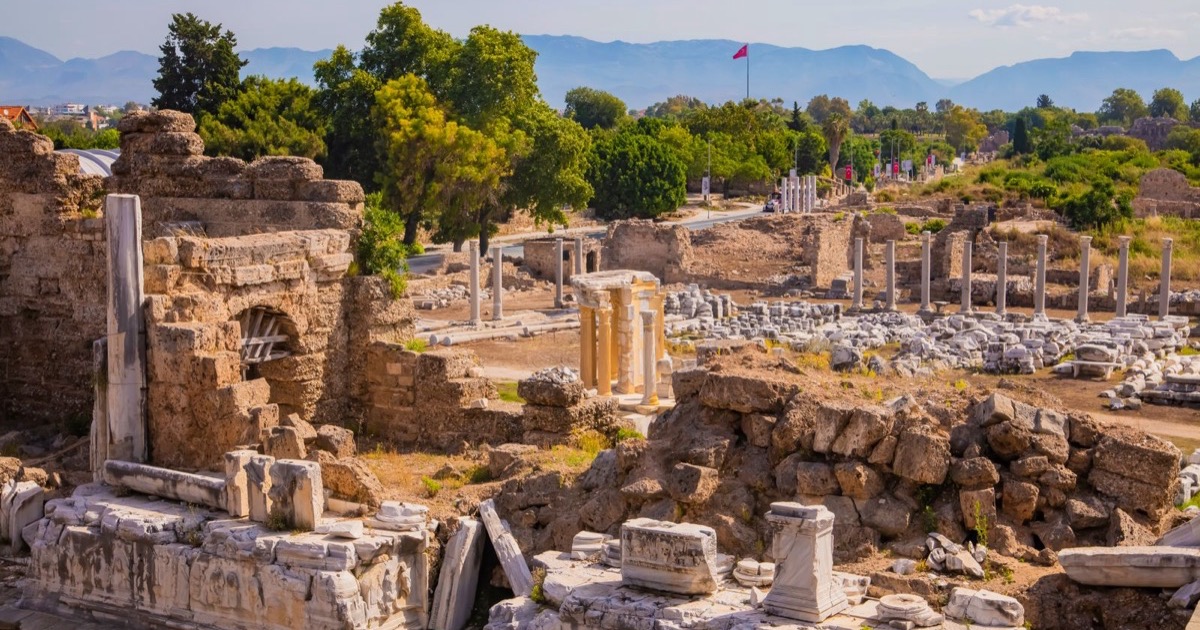

Planning an Antalya historic walking tour in 2026 means balancing the city's ancient layers with modern navigation tools.
Planning an Antalya historic walking tour in 2026 means balancing the city's ancient layers with modern navigation tools. The Old Town, known locally as Kaleiçi, offers a compact arena where Roman arches, Seljuk towers, and Ottoman streets converge. With a clear itinerary, you can experience centuries of culture without feeling rushed. Below is a practical framework for the first leg of your journey.
What are the must‑see historic sites on a walking tour of Antalya’s Old Town?
Begin at Hadrian's Gate, the monumental marble entrance erected in 130 AD to honor the Roman emperor’s visit. Its towering columns and intricate reliefs frame the transition from the bustling harbor promenade to the quieter cobblestone streets of Kaleiçi. A short stroll east brings you to the Clock Tower, an Ottoman‑era structure that now serves as a popular meeting point and offers a glimpse of 19th‑century civic pride.
Continuing south, the Hıdırlık Tower rises on a rocky outcrop overlooking the Mediterranean. Originally built by the Romans and later reinforced by the Seljuks, the tower provides panoramic views of the harbor and the ancient city walls. Nearby, remnants of Roman baths and the ancient harbor walls whisper of Antalya’s role as a key trade hub during antiquity. Each site is within comfortable walking distance, allowing you to absorb the layers of history without extensive transit.
How can I create a self‑guided walking route through Kaleiçi in 2026?
Modern travelers benefit from a range of digital and printable resources. Mobile applications that integrate GPS with augmented‑reality overlays can pinpoint each landmark, deliver multilingual audio snippets, and suggest nearby cafés for a quick break. For visitors who prefer offline navigation, downloadable PDF maps preserve the route on any device, while QR codes placed at key points unlock detailed descriptions without needing an internet connection.
When assembling your itinerary, consider the following criteria: level of interactivity, need for internet access, battery consumption, and the depth of historical commentary. The table below compares four popular self‑guided options, helping you select the tool that aligns with your travel style.
| Option | Interactivity | Offline Capability | Typical Cost (2026) | Best For |
|---|---|---|---|---|
| GPS‑Enabled Mobile App | Live map, AR overlays, push notifications | Partial (maps can be saved) | Free‑to‑premium | Tech‑savvy explorers |
| Printable PDF Route | Static map with numbered stops | Full (once printed) | Free | Minimalist walkers |
| Audio Guide Download | Pre‑recorded narration, optional GPS sync | Full (audio files stored) | Low‑cost subscription | Auditory learners |
| QR‑Code Trail | Instant text, images, short videos at each point | Partial (requires occasional connection) | Free | Visitors who enjoy quick bites of info |
Which landmarks in Antalya reflect the Seljuk and Roman eras?
The Seljuk imprint is most evident in the Yivli Minaret, a fluted stone tower that once anchored a grand mosque and now stands as a symbol of the city’s medieval period. Nearby, the Kesik Minare (Broken Minaret) offers a stark reminder of the 13th‑century earthquake that reshaped the skyline. These structures showcase characteristic Seljuk brickwork and ornamental patterns that differ sharply from the classical Roman stone.
Roman influence persists in the well‑preserved ruins of the ancient theater at Aspendos, a short drive from the city center but easily reachable by public transport. Within Kaleiçi itself, the remnants of the Roman harbour walls and the Hıdırlık Tower’s original foundations illustrate the engineering prowess of the empire. Together, these sites allow walkers to compare two distinct architectural languages that have shaped Antalya’s identity over millennia.
Where can I find free maps or digital guides for Antalya’s historic walking tour?
The Antalya Municipality maintains an up‑to‑date online portal that offers downloadable PDFs of the Kaleiçi walking tour. These files include street names, landmark icons, and short historical notes, and they can be saved to a phone or printed at a local kiosk without charge. The portal also provides QR codes placed at strategic points such as Hadrian’s Gate and the Clock Tower; scanning the code opens a lightweight web page with an interactive map and audio snippets describing the surrounding Seljuk structures.
For travelers who prefer a single app, the official “Visit Antalya” application, available on both iOS and Android, bundles a GPS‑enabled map, offline tile storage, and a self‑guided audio guide that updates automatically in 2026 to reflect newly restored sites. The app’s “Seljuk Trail” filter highlights lesser‑known monuments like the 12th‑century Tekeli Mehmet Pasha Mosque, allowing users to stay on course without needing a printed sheet.
| Source | Format | Offline Capability | Seljuk Highlights |
|---|---|---|---|
| Antalya Municipality website | PDF download | Full offline after save | Basic list, links to detailed pages |
| Visit Antalya app | Interactive app | Map tiles and audio can be pre‑cached | Dedicated Seljuk filter with icons |
| Google Maps (offline area) | Standard map | Requires pre‑download of city area | Generic, no specific Seljuk markers |
| GetYourGuide PDF guide | PDF brochure | Fully offline after download | Highlights major Seljuk sites only |
What is the best time of day to explore Antalya’s ancient streets on foot?
Antalya’s Mediterranean climate creates a distinct rhythm for pedestrians. Early morning, just after sunrise, offers cool temperatures and softer shadows that reveal the texture of stone arches and mosaics. Most cafés along the harbor open around 08:00, providing a convenient spot for a light breakfast before the crowds arrive.
Midday heat can be intense, especially from June through August. During these hours, the sun beats directly on the narrow lanes, making prolonged exposure uncomfortable. However, the afternoon brings a gentle breeze from the sea, and the city’s historic monuments are illuminated by the low angle of the sun, casting dramatic contrasts that enhance photographic opportunities.
- 07:30 – 08:30 : Sunrise walk; optimal for photography and minimal foot traffic.
- 09:00 – 11:00 : Comfortable temperature; museums and small galleries are fully open.
- 12:00 – 14:00 : Heat peak; advisable to seek shade, enjoy indoor attractions, or rest.
- 15:00 – 17:30 : Light eases, shadows lengthen; perfect for strolling along the harbor promenade.
- 18:00 – 20:00 : Evening glow; historic gates such as Hadrian’s Gate are lit, creating a romantic ambience.
- 20:30 – 22:00 : Night walk; streets are quieter, and many restaurants offer terrace seating.
- 22:30 + : Late‑night strolls are safe but limited to well‑lit main arteries.
How safe is walking around Antalya’s Old City for solo travelers?
Antalya’s Old City (Kaleiçi) is regularly patrolled by municipal police and tourist‑security officers, especially near major attractions like the Clock Tower and Hıdırlık Tower. The presence of uniformed staff contributes to a sense of security, and most incidents reported involve petty theft rather than violent crime.
Lighting along the main cobblestone streets is adequate after dusk, and many cafés and shops remain open until 23:00, providing natural surveillance. Solo travelers should keep valuables concealed, avoid displaying expensive electronics, and stay aware of crowded markets where pickpockets may operate.
In case of an emergency, dialing the national number 155 connects directly to police services, and the municipal “Tourist Help” desk located near the main entrance of Kaleiçi offers multilingual assistance. Overall, the combination of visible security, well‑lit pathways, and responsive local services makes solo walking tours a reasonably safe activity for most visitors.
Which cafés and restaurants are near the main historic attractions in Kaleiçi?
Just steps from Hadrian’s Gate, a cluster of patio cafés spill onto the cobbled lane, offering espresso, fresh fruit juices, and light bites while visitors admire the Roman arch. The seating areas often overlook the gentle flow of the old city walls, providing a pleasant spot to pause after crossing the stone threshold.
A short walk toward Hıdırlık Tower brings a selection of seaside bistros that specialize in grilled fish and meze plates. Many of these establishments feature open‑air decks that frame the harbor, allowing diners to watch yachts glide by as the sun sets behind the tower’s silhouette.
The Clock Tower’s vicinity hosts several family‑run eateries tucked into narrow alleys. Here, traditional Turkish pastries, aromatic tea, and locally sourced vegetables are served on simple wooden tables. The ambience is relaxed, and the proximity to the central square makes it easy to refuel before continuing the exploration of Kaleiçi.
How long does a typical historic walking tour of Antalya’s Old Town take?
A standard self‑guided route that covers the principal monuments—Clock Tower, Hadrian’s Gate, Hıdırlık Tower, the Roman harbour, and the surrounding Ottoman houses—usually requires three to four hours of walking time. The pace assumes brief stops for photographs, interpretive signage, and occasional rests at cafés.
Visitors who wish to include the small museums, the ancient city walls, and a few of the lesser‑known courtyards should allocate an additional hour or two. The total duration can be adjusted based on personal interest, fitness level, and the desire to linger over meals or local crafts.
- Start at the Clock Tower, spend 15 minutes exploring the surrounding square.
- Proceed to Hadrian’s Gate, allow 20 minutes for the arch and nearby inscriptions.
- Walk along the harbour promenade to Hıdırlık Tower, allocate 25 minutes for the tower and its views.
- Continue to the Roman harbour ruins, set aside 30 minutes for the excavated structures.
- Explore the Ottoman‑era houses on the main pedestrian street, 20 minutes.
- Visit the small museum of archaeology, 15 minutes.
- Conclude with a coffee break at a nearby café, 20 minutes.
What public transport options connect to the starting point of the Antalya walking tour?
The most convenient link to the Clock Tower area is the city tram line that runs along the coastal boulevard and stops at the “Kaleiçi” station. From this stop, the historic centre is a brief walk of less than five minutes, and the tram operates at ten‑minute intervals during peak hours.
Several municipal bus routes also serve the old town entrance, with stops labeled “Antalya Old Town” or “Kaleiçi”. These buses travel from the main bus terminal, the university district, and the airport‑link station, providing regular service throughout the day.
For travelers preferring a more flexible option, the shared minibusses known locally as “dolmuş” run along the waterfront and make frequent stops near the harbour promenade. Taxis are readily available at the main square and can be flagged on the street; they typically charge a flat rate to the historic centre, making the short ride predictable.
Are there any audio guide apps that cover Antalya’s historic sites in 2026?
Several mobile applications now deliver location‑based narration for the monuments of Kaleiçi and the surrounding ruins. The “Antalya Heritage Audio” app combines GPS triggers with short, multilingual commentaries that play automatically as you approach landmarks such as Hadrian’s Gate, the Hıdırlık Tower, and the ancient Roman harbour. A newer AR‑enabled platform, “Culture Trail AR,” overlays historic photographs and 3‑D reconstructions onto your screen, letting you compare the present streetscape with its Roman‑Byzantine past.
All of these services work offline after an initial download, which is essential during the summer months when cellular coverage can be spotty near the walls. Subscriptions are modest, typically under €5 per month, and many offer a free trial period that includes the core Old Town circuit. Remember to bring a portable charger; the audio files and AR graphics can drain battery life quickly, especially on older smartphones.
How can I incorporate Antalya’s harbor and seaside promenade into a historic walking tour?
Begin your day at the modern marina that hugs the historic harbour, where the sea breeze meets the stone facades of the old city. From the dock, follow the paved promenade eastward, crossing the Yivli Minaret and the adjacent Kesik Minare, before arriving at the Roman harbour wall that once protected merchant vessels. The walk continues along the cliff‑side path that offers panoramic views of the Mediterranean while you pass the remnants of the ancient breakwater and the Ottoman‑era clock tower.
Time the stroll to coincide with the late afternoon light, which highlights the pastel hues of the historic walls and creates a striking backdrop for photographs. At the end of the promenade, you can board a short boat excursion to the nearby small islands, adding a nautical perspective to the same architectural narrative you have been following on foot. A quick coffee at one of the waterfront cafés provides a pleasant pause before you head back into the winding lanes of Kaleiçi.
Sources & Further Reading
Frequently Asked Questions
Do I need a guide to walk through Antalya’s Old Town?
A professional guide is not mandatory, but it can enrich the experience by providing context that signage often lacks. Self‑guided audio tours and printed maps are sufficient for most travelers who prefer to set their own pace. If you enjoy spontaneous discoveries, the cobbled streets reward curiosity with hidden inscriptions and subtle architectural details.
Is there an official Antalya walking tour map available for free?
The municipality’s tourism office distributes laminated maps at the main visitor centre near the Clock Tower. These maps outline the primary historic circuit, indicate restroom locations, and mark wheelchair‑friendly paths. Digital versions are also downloadable from the city’s official tourism website, allowing you to store them on your phone without incurring any cost.
Which historic gate should I start my Antalya walking tour at?
Most itineraries begin at Hadrian’s Gate, the triumphal arch erected in the second century AD to honor the Roman emperor’s visit. The gate’s central position provides immediate access to the main arteries of Kaleiçi, linking the ancient harbour with the Ottoman‑era market streets. Starting here also places you within sight of the adjacent Roman mosaics, setting a historic tone for the walk.
Can I combine a walking tour with a boat trip from Antalya harbor?
Yes, the harbour area offers scheduled short‑duration boat tours that depart every hour during the high season. These trips typically last 45 minutes and circle the coastline, giving you a sea‑level view of the ancient walls and the modern promenade. Booking a spot is easy; most operators accept cash or card on the dock, and you can purchase a ticket after completing the first half of your walking route.
Are there wheelchair‑accessible routes in Kaleiçi?
Several sections of the Old Town have been upgraded with smooth stone slabs and gentle ramps, especially along the main thoroughfares connecting the harbour, the Clock Tower, and the Antalya Museum. The promenade itself is fully accessible, and the municipal map highlights the few stair‑only passages to help you avoid obstacles. Portable ramps are available at the visitor centre for temporary use on uneven sections.
What are the opening hours of the main historic sites in Antalya?
Most monuments, such as Hadrian’s Gate, the Hıdırlık Tower, and the Roman harbour wall, are accessible to the public at all hours, as they are open‑air structures. Museums, including the Antalya Museum and the Tekeli Mehmet Pasha Mansion, generally operate from 9 am to 5 pm, with a half‑hour break at midday. Seasonal variations may affect closing times during winter, so it is advisable to check the latest schedule online.
How much should I budget for a day of historic walking in Antalya?
A reasonable daily budget ranges from €30 to €50 per person. This covers a modest lunch at a local café, a ticket for a short harbour boat ride, and any optional entry fees for museums or archaeological sites that require payment. Public transport, water, and occasional souvenirs can be added without exceeding the estimate, provided you avoid high‑priced tourist traps.
Plan your route the night before, charge all devices, and keep a reusable water bottle handy to stay refreshed while you explore the layers of history that line Antalya’s streets and shoreline. A well‑timed start will let you enjoy cooler morning light and finish with a sunset over the Mediterranean, capping a day of discovery with a memorable view.
Plan your trip
Book Istanbul attraction tickets
Skip-the-line tickets and guided tours for Istanbul's top sights, with mobile tickets and flexible cancellation.
See tickets on TiqetsWe may earn a commission from bookings made through this link, at no extra cost to you.
Reviewed by our editor for Türkiye & the Eastern Mediterranean
Elif DemirTürkiye & Eastern Mediterranean Editor
Travel writer covering Türkiye and the Eastern Mediterranean, from Istanbul's old city to the Aegean coast.
More articles by Elif Demir →