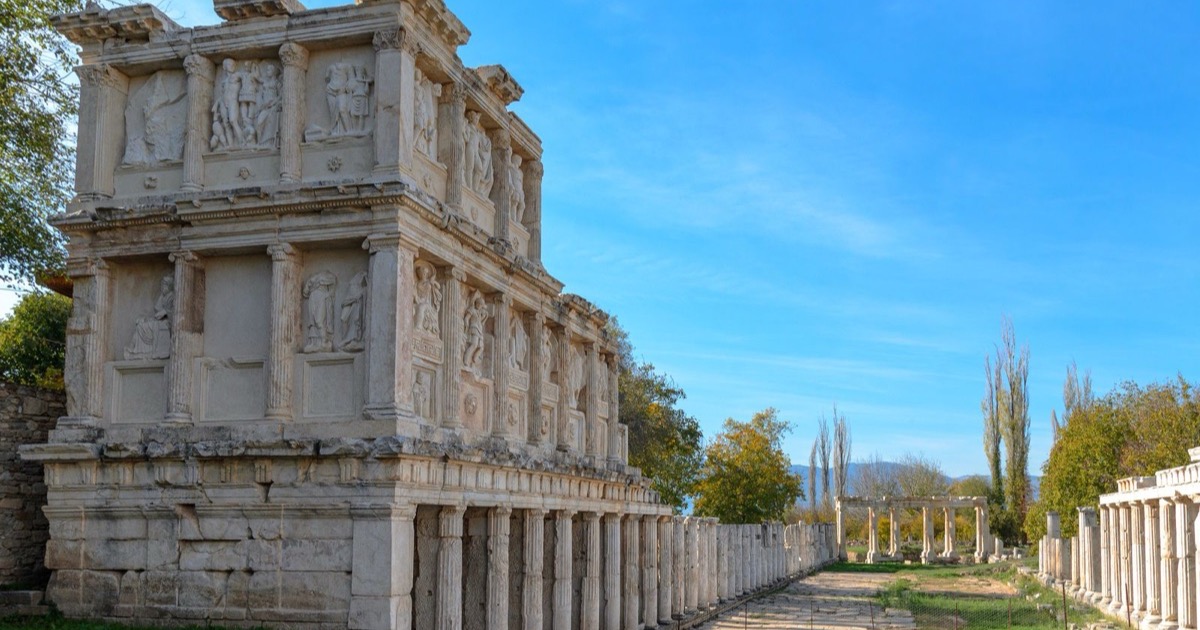

Planning a quick escape from the bustling waterfront of Kusadasi? A day trip Priene from Kusadasi offers a compact yet rewarding dive into classical architecture,…
Planning a quick escape from the bustling waterfront of Kusadasi? A day trip Priene from Kusadasi offers a compact yet rewarding dive into classical architecture, sweeping valley views, and a slice of Aegean history that fits neatly into a single sunrise‑to‑sunset itinerary. The ancient Ionian city sits just an hour away, making it an ideal contrast to the beach‑focused pace of the town. With organized minibus pickups and clear signage, the journey feels as smooth as the destination feels inspiring.
Why is a day trip to Priene considered the top Aegean experience from Kusadasi?
Priene combines three elements that many travelers seek in a single outing: well‑preserved Greek ruins, dramatic natural scenery, and easy accessibility. The city’s grid‑like layout, designed by the architect Hippodamus, showcases a rare example of ancient urban planning that still reads clearly on the hillside. From the marble colonnades of the Temple of Athena to the expansive agora, each stone tells a story that resonates with both history buffs and casual sightseers.
Beyond the stonework, the site commands an uninterrupted view over the surrounding valley and the distant Aegean Sea. This visual backdrop creates a sense of scale that amplifies the significance of the ruins without relying on modern attractions. Because the location is reachable by regular dolmuş routes, private taxis, or guided tours, visitors can choose the transport mode that best fits their schedule and budget, ensuring the experience remains flexible.
What historical highlights can you explore at the ancient city of Priene?
The centerpiece of the site is the Temple of Athena, a Doric structure that once dominated the acropolis. Although only columns remain, the alignment of the temple offers insight into ancient religious practices and the city’s devotion to the goddess of wisdom. Just below the temple, the agora served as the commercial heart of Priene, where merchants once bartered goods under a colonnaded roof.
Another must‑see feature is the well‑preserved theatre, which once accommodated up to 3,000 spectators. Its semicircular seating still frames the horizon, allowing modern visitors to imagine ancient performances against the same sky. A Byzantine‑era church, dating from the 5th century, sits quietly on the site’s western edge, illustrating the layered religious history that followed the Greek period.
| Feature | Historical Period | Key Detail |
|---|---|---|
| Temple of Athena | Greek (5th c. BC) | Remaining Doric columns; orientation aligns with sunrise |
| Agora | Greek (4th c. BC) | Marketplace layout with marble stoas |
| Theatre | Greek (2nd c. BC) | Seating for ~3,000; natural acoustics |
| Byzantine Church | Byzantine (5th c.) | Simple nave, early Christian fresco fragments |
How long does it take to travel from Kusadasi to Priene and back?
The most common route follows the D550 highway northward for roughly 70 kilometers. By private car or organized minibus, the journey typically takes 1 hour to 1 hour 15 minutes, depending on traffic conditions near the coastal stretch. Public dolmuş services run several times daily, with a slightly longer travel time of about 1 hour 30 minutes because of scheduled stops.
For a comfortable day schedule, most tours allocate 30 minutes for pickup, 1 hour for the outbound drive, 2‑3 hours exploring the ruins, and the same amount of time for the return leg. This structure leaves enough flexibility to enjoy a leisurely lunch at a local eatery near the site without feeling rushed, while still returning to Kusadasi before evening activities resume.
What are the most convenient transportation options for a Priene day tour?
Travelers departing from Kus a daşi have four practical ways to reach the ancient city of Priene, each with its own rhythm and level of service. The most common choice is a shared dolmuş that departs from the main bus terminal; it follows the D525 highway, stops briefly at the town of Selçuk, and continues to the Priene parking area. The ride lasts roughly 70 minutes, and the fare is modest, making it a budget‑friendly alternative for solo adventurers or small groups.
For those who prefer a door‑to‑door experience, a private taxi or ride‑hailing vehicle can be booked through local apps or hotel concierges. The journey takes about 55 minutes under normal traffic, and the driver usually waits while you explore the site. This option eliminates the need to coordinate schedules and provides a comfortable, air‑conditioned environment, though the cost is higher than public transport.
Organized day tours remain popular because they bundle transportation, a guide, and sometimes entry tickets into a single price. Companies typically use a modern minibus that departs early in the morning, arrives at Priene before the crowds, and includes a brief stop at the nearby Byzantine church. The guide offers context on the agora, the theatre, and the city’s layout, adding educational value without requiring you to arrange anything yourself.
| Option | Travel Time | Typical Cost (per person) | Comfort | Flexibility |
|---|---|---|---|---|
| Shared dolmuş | ≈70 min | Low | Basic, no air‑conditioning | Fixed schedule, limited stops |
| Private taxi / ride‑hailing | ≈55 min | Medium‑high | Air‑conditioned, door‑to‑door | High – can wait on site |
| Organized minibus tour | ≈60 min | Medium | Air‑conditioned, guide on board | Moderate – set itinerary |
| Rental car | ≈50 min | Medium (fuel + rental) | Personal vehicle, full control | Very high – you set the pace |
Which sights and viewpoints offer the best photography opportunities in Priene?
Priene’s layout on a gentle slope provides natural frames for dramatic shots. The highest point of the site is the Temple of Athena; from its marble steps you can capture sweeping vistas of the valley, the distant Aegean Sea, and the winding road that leads to the ruins. Early morning light often paints the columns with a warm glow, creating a timeless atmosphere.
- Temple of Athena – panoramic view of the valley and sea.
- Ancient theatre – tiered stone seating against the hillside, ideal for sunset silhouettes.
- Agora – open marketplace surrounded by columned facades, perfect for perspective shots.
- City walls – stone ramparts that frame the landscape, offering a sense of scale.
- Byzantine church (5th century) – contrasting red‑brick architecture amid the Greek ruins.
- View from the western terrace – captures the interplay of light on the marble columns.
- Path along the southern slope – leading lines that draw the eye toward the horizon.
What should you pack for a comfortable day exploring Priene’s ruins?
A pair of well‑broken walking shoes is essential; the stone pathways can be uneven, and some sections are slightly inclined. Bring a lightweight, breathable shirt, a hat, and sunglasses to protect against the Mediterranean sun, especially during the midday heat of summer months.
Hydration is critical, so carry at least one litre of water in a reusable bottle. A small, zip‑pered backpack can hold sunscreen, a portable charger for your camera or phone, and a compact rain jacket in case of an unexpected shower. If you plan to photograph the site extensively, pack extra memory cards and a lens cloth to keep glass surfaces clean while you move between viewpoints.
How does the Priene day trip compare to visits to Miletus or Didyma?
Priene offers a compact yet complete snapshot of classical urban planning. The grid‑iron layout, the well‑preserved agora, and the sweeping view of the valley give a sense of the city’s original scale without requiring hours of wandering. By contrast, Miletus spreads across a larger plateau; its extensive gymnasium and massive theater demand more walking time, and the site’s ruins are more fragmented due to later agricultural use. Didyma, famous for the Oracle, centers on a monumental temple complex that dominates the landscape, but the interior remains largely unexcavated, limiting the amount of visible architecture.
Logistically, Priene fits neatly into a half‑day schedule. Most minibus tours from Kusadasi pick up guests early, drive roughly one hour along the coastal road, and return by late afternoon, leaving ample time for a beach stop or a stroll through the town. Miletus and Didyma each require a longer travel segment—especially Didyma, which sits closer to the coast and often involves a combined itinerary with the nearby sanctuary of Apollo, adding extra mileage. For travelers who value a balanced day of movement and contemplation, Priene’s layout and proximity make it the most efficient choice.
From a storytelling perspective, Priene’s surviving structures—such as the Ionic columns of the temple of Athena and the 5th‑century Byzantine church—allow guides to illustrate a continuous thread of occupation. Miletus provides a broader narrative of intellectual history, while Didyma focuses on religious mystique. Depending on whether a visitor prefers civic, philosophical, or prophetic themes, the three sites each shine, but Priene delivers the most varied experience in the shortest timeframe.
What local foods or snacks can you enjoy during a Priene excursion?
The drive from Kusadasi to Priene passes several roadside stalls that serve quick, satisfying bites. Travelers often stop for a handful of roasted chickpeas seasoned with paprika, a snack that pairs well with the region’s warm, dry climate. Freshly squeezed pomegranate juice is another popular refreshment, offering a burst of sweetness without the need for refrigeration.
Once at the site, the nearby village of Güllük hosts modest cafés where you can sample traditional Turkish tea alongside a slice of simit—an sesame‑crusted bread ring that is both portable and filling. For those craving something heartier, a small plate of grilled halloumi with a drizzle of olive oil and lemon provides a protein boost without slowing the sightseeing pace.
- Roasted chickpeas with smoked paprika
- Pomegranate juice, served chilled
- Simit (sesame‑crusted bread ring)
- Grilled halloumi with lemon
- Olive tapenade on crusty flatbread
- Honey‑drizzled walnuts
- Fresh figs when in season
Are guided tours or self‑guided visits better for discovering Priene’s history?
Guided tours bring a professional narrative to the ruins, often highlighting subtle architectural details that a casual observer might miss. A knowledgeable guide can explain the significance of the agora’s colonnades, point out the original orientation of the temple of Athena, and share anecdotes about the Byzantine church’s later adaptation. Most minibus operators include a licensed guide who speaks several languages, ensuring that non‑Turkish speakers receive the same depth of information.
Self‑guided visits, on the other hand, grant flexibility. With a downloadable audio guide or a printed map, travelers can linger at the theater’s stage, explore the residential quarters at their own pace, and photograph the valley view without time constraints. The site’s layout is straightforward, and signage in multiple languages marks the principal structures, making independent exploration feasible for confident walkers.
Choosing between the two depends on personal preference. If you value a curated storyline and prefer not to research each monument on the spot, a guided minibus tour offers convenience and context. If you enjoy pausing wherever curiosity strikes and have a reliable offline map, a self‑guided approach lets you tailor the experience to your rhythm. Both methods provide access to the same archaeological treasures; the decision rests on how you wish to balance structure and spontaneity during the day trip.
What time of year provides the ideal weather for a Priene day trip in 2026?
Late spring, from mid‑April to early June, offers the most reliable combination of warm sunshine and gentle breezes on the Aegean coast. Daytime temperatures usually sit between 20 °C and 26 °C, which is comfortable for walking among the marble columns and climbing the gentle slopes that lead to the theatre. Rainfall is scarce during this window, and the surrounding valley remains lush enough to frame the ruins with a pleasant green backdrop.
Early autumn, particularly late September through early October, repeats many of the spring advantages while adding a slightly cooler sea temperature for those who wish to dip their feet after exploring the site. Average highs linger around 23 °C, and the light evenings are ideal for enjoying a glass of local wine at a nearby tavern. The tourist flow begins to thin after the peak summer months, granting a more relaxed atmosphere at the entrance and in the on‑site café.
Mid‑summer months (July–August) can still be enjoyable, but temperatures often climb above 30 °C, and the sun can become intense on the exposed stone. If you travel during this period, plan an early start before 9 am, carry plenty of water, and wear a wide‑brimmed hat. The heat is the main variable, not the site itself, which remains fully accessible.
How can you combine a Pringe visit with other nearby attractions from Kusadasi?
A popular itinerary pairs Pringe with the ancient sanctuary of Didyma, famed for its massive Temple of Apollo. Both sites lie along the same coastal road, and the drive between them takes roughly 30 minutes. After touring Pringe’s agora and theatre, continue eastward to Didyma where the impressive columned façade and the well‑preserved oracle chamber await. The two stops together give a clear picture of Ionian religious and civic life within a single morning.
For travelers interested in maritime history, the nearby port town of Miletus offers extensive ruins that stretch down to the sea. After Didyma, a short detour south leads to Miletus’s grand theatre, the famed “Craters” market, and the remnants of the ancient lighthouse. The combined route—Pringe, Didyma, Miletus—covers roughly 80 km and can be completed in a full‑day private minibus, allowing ample time for photo stops and short walks.
Those who prefer a more relaxed pace may add a stop at the 5th‑century Byzantine church perched on the hill above Pringe. The modest structure provides a quiet place for reflection and a glimpse of later Christian architecture that overlays the earlier Greek foundations. Pairing this with a leisurely lunch at a hillside restaurant overlooking the valley creates a balanced day of archaeology, scenery, and local cuisine.
Sources & Further Reading
Frequently Asked Questions
Can I visit Pringe without joining a tour group?
Yes, independent travelers can reach Pringe by hiring a taxi, using a local dolmuş, or renting a car in Kusadasi. The site has a clearly marked parking area a short walk from the main entrance, and signage in English and Turkish guides visitors from the road to the ruins. Public transport runs less frequently on weekends, so checking the latest schedule is advisable.
What is the entry fee for the Pringe archaeological site?
The admission price for adult visitors is modest, with a reduced rate for students and seniors who present valid identification. Children under a certain age enter free of charge. Fees are collected at a small ticket booth near the entrance, and the proceeds support ongoing conservation work on the marble columns and stone theatres.
Is there a restroom or visitor center at Pringe?
A basic visitor centre near the main gate offers restrooms, a water fountain, and a short exhibition of artefacts recovered from the site. The facilities are clean and accessible during opening hours, which run from early morning until late afternoon. A small souvenir shop adjacent to the centre sells locally made items such as pottery replicas and postcards.
How early should I arrive to avoid crowds at Pringe?
Arriving before 9 am generally guarantees a quieter experience, especially during the high season of July and August. The site tends to become busier after mid‑morning as tour groups from Kusadasi and nearby towns arrive. Early visitors also benefit from softer lighting for photography and cooler temperatures for walking the steep pathways.
Are there wheelchair‑friendly paths at the Pringe ruins?
While the main promenade between the agora and the theatre has been partially paved, several sections remain uneven stone steps that can be challenging for wheelchair users. The on‑site information desk can provide a map highlighting the most accessible routes, and staff are usually willing to assist with short lifts where feasible.
What is the best way to book a day trip from Kusadasi to Pringe?
Online platforms that specialize in Turkish tours allow you to compare prices, vehicle types, and guide options before confirming a reservation. Booking a few weeks in advance secures a spot on a minibus that departs early from most hotels. For greater flexibility, you may also contact a local travel agency in Kusadasi to arrange a private driver on the day of travel.
Do I need a guide to understand the history of Pringe?
A professional guide can enrich the visit with stories about the city’s layout, its role in the Ionian League, and the surviving sculptures. However, informational panels in English are placed at key points, and a downloadable audio guide is available through the official heritage website. Visitors comfortable reading on their own can still gain a solid overview without a live guide.
What currency is accepted for tickets and souvenirs at Pringe?
All payments at the ticket booth and the souvenir shop are accepted in Turkish lira. Some vendors near the entrance also take credit cards, but cash is preferred for small purchases such as snacks or postcards. It is advisable to carry a modest amount of local currency to avoid any inconvenience.
Can I combine a Pringe day trip with a visit to Didyma or Miletus?
Yes, the three sites lie along a convenient coastal corridor, making it easy to visit all of them in a single day. Many tour operators design itineraries that include Pringe in the morning, Didyma at midday, and Miletus in the afternoon, with scheduled breaks for lunch. Independent travelers can follow the same route using a rented car, allowing for personalized pacing.
What are the recommended dining options near the Pringe site?
Near the parking area, a modest café serves traditional Turkish tea, fresh fruit, and light snacks such as simit and gözleme. For a fuller meal, a family‑run restaurant a short drive away offers grilled fish, seasonal vegetables, and locally produced olive oil. Both venues provide outdoor seating with views of the valley, creating a pleasant setting after a morning of exploring the ruins.
Plan your departure time, pack water, and wear comfortable shoes, then let the ancient streets of Pringe guide your afternoon. The blend of history, scenery, and nearby attractions makes it a standout day trip from Kusadasi.
Plan your trip
Book Istanbul attraction tickets
Skip-the-line tickets and guided tours for Istanbul's top sights, with mobile tickets and flexible cancellation.
See tickets on TiqetsWe may earn a commission from bookings made through this link, at no extra cost to you.
Reviewed by our editor for Türkiye & the Eastern Mediterranean
Elif DemirTürkiye & Eastern Mediterranean Editor
Travel writer covering Türkiye and the Eastern Mediterranean, from Istanbul's old city to the Aegean coast.
More articles by Elif Demir →