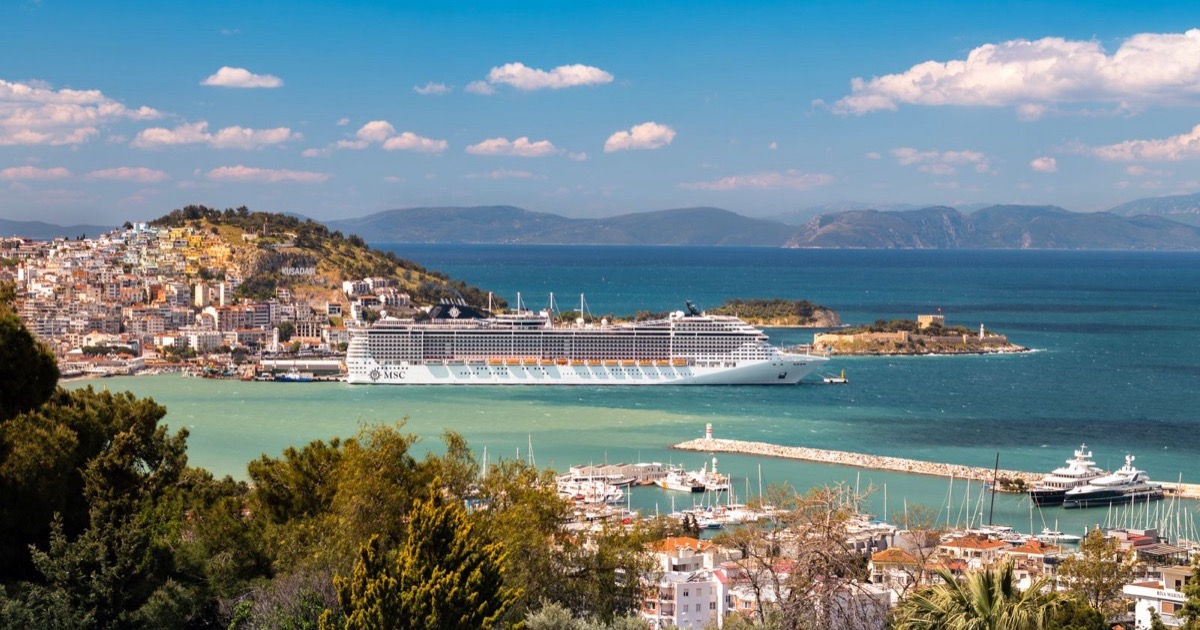

Travelers arriving in Kusadasi often look for a day that blends history, spirituality, and the Aegean breeze.
Travelers arriving in Kusadasi often look for a day that blends history, spirituality, and the Aegean breeze. The Virgin Mary house tour Kusadasi delivers exactly that, guiding you from the bustling port to the serene sanctuary where tradition holds the Mother of Jesus spent her final days. With expert guides, comfortable transport, and a schedule that respects both archaeological wonder and quiet reflection, this excursion has become a cornerstone of the region’s itinerary.
What can I expect on a House of the Virgin Mary tour from Kusadasi?
The journey begins at the Kusadasi marina, where a climate‑controlled coach awaits. After a short drive along the coastal road, the group arrives at the ancient site of Ephesus. Here, guides provide context about the Roman streets, the Library of Celsus, and the Great Theatre, using visual aids and anecdotes that bring the ruins to life. The emphasis is on storytelling that links the city’s pagan past with its early Christian significance.
Following the exploration of Ephesus, the itinerary moves inland toward the hillside village of Şirince. The drive offers panoramic views of olive groves and vineyards, allowing passengers to absorb the landscape before a brief stop for a local refreshment. The final segment of the tour is the pilgrimage to the House of the Virgin Mary, a modest stone structure perched on the slopes of Mt. Koressos. Inside, candlelit alcoves and a marble altar create a contemplative atmosphere; guides explain the 1950 discovery, the subsequent Vatican endorsement, and the ongoing tradition of pilgrim visits.
Throughout the day, participants benefit from multilingual commentary, optional prayer time, and the ability to ask questions about the historical and theological layers of each site. The tour concludes back at the port in the early evening, leaving travelers with both a deeper understanding of early Christianity and a collection of vivid memories.
How long does the combined Ephesus and Virgin Mary pilgrimage day trip last?
Standard group tours allocate roughly nine hours from departure to return, including a half‑hour lunch break in Şirince. Private arrangements can be tailored, offering either a compact six‑hour version that skips the village stop or an extended ten‑hour schedule that adds a short visit to the Temple of Artemis ruins. The flexibility is supported by the ExcursionsFi “tour sync” feature, which automatically imports the selected itinerary into personal travel apps, ensuring seamless coordination with other plans.
Travel time between each point is factored into the schedule. The drive from Kusadasi to Ephesus averages 30 minutes, while the ascent to the Virgin Mary’s House adds another 45 minutes. Return to the port takes about an hour, allowing for a relaxed pace that accommodates photo stops and moments of quiet reflection.
| Option | Duration | Key Inclusions | Typical Departure Time |
|---|---|---|---|
| Standard Group | ≈9 hrs | Ephesus main sites, Şirince village snack, Virgin Mary house, multilingual guide | 08:00 am |
| Compact Private | ≈6 hrs | Ephesus highlights, Virgin Mary house, personalized commentary | 09:30 am |
| Extended Private | ≈10 hrs | Ephesus full walk, Şirince lunch, Temple of Artemis, Virgin Mary house, flexible pacing | 07:30 am |
Choosing the right version depends on personal stamina, interest in additional sites, and the desire for a more intimate guide interaction. All options guarantee entry to the sacred house and the major Ephesus landmarks.
Which sites are included in the private Ephesus and Virgin Mary tour from Kusadasi Port?
The private tour is curated to showcase the most significant archaeological and spiritual points within a comfortable timeframe. The itinerary begins with the **Curetes Street**, the ancient main thoroughfare that once bustled with merchants and philosophers. From there, visitors proceed to the **Library of Celsus**, an iconic façade that once housed thousands of scrolls, and the **Great Theatre**, still capable of seating tens of thousands of spectators.
After the Roman highlights, the guide leads the group to the **House of the Virgin Mary**. The stop includes a brief meditation period, an explanation of the site's discovery in the 20th century, and a chance to leave a candle or prayer note. The private format allows guests to linger longer, ask detailed questions, and capture photographs without the pressure of a large crowd.
For those who opt for the extended private package, the tour adds a brief visit to the **Temple of Artemis**—one of the Seven Wonders of the Ancient World—followed by a scenic drive through the **Şirince countryside**, where participants can sample local fruit preserves. Each segment is designed to balance educational depth with the serene pace that a pilgrimage demands.
How do I book the Inside the House of the Virgin Mary tour for 2026?
Most operators in Kusâdasi let you reserve a spot online through a simple form or a mobile app. The process usually begins with selecting the departure date, then choosing the type of service—private guide, shared group, or the ExcursionsFi “tour sync” option that imports the full itinerary into your personal travel planner. After confirming the number of participants, you will be asked for basic contact details and a payment method; a small non‑refundable deposit secures the reservation, with the balance due a few days before the start date.
Travelers who prefer a hands‑off approach can rely on the “tour sync” feature. Once you activate it, the system automatically adds the day‑long schedule—including pick‑up time at the Kusâdasi port, the Ephesus archaeological stop, the Şirince village break, and the final visit to the House of the Virgin Mary—to your ExcursionsFi account. This eliminates manual entry and ensures you receive real‑time updates about any changes in meeting points or weather‑related adjustments.
| Option | Price Range (per adult) | Inclusions | Flexibility |
|---|---|---|---|
| Private guide (full day) | €120‑€150 | Personal driver, English‑speaking guide, entrance fees, lunch | Custom itinerary, exclusive vehicle |
| Shared group (max 15) | €55‑€70 | Transport, guide, entrance fees, light snack | Fixed schedule, limited stops |
| ExcursionsFi “tour sync” | €65‑€80 | Standard group transport, guide, digital itinerary, entrance fees | Auto‑updates, easy calendar integration |
What is the best time of year to visit the House of the Virgin Mary near Ephesus?
The site welcomes visitors year‑round, but certain months provide more comfortable conditions for walking and sightseeing. Spring brings moderate temperatures and the surrounding hills are often covered with wildflowers, creating a pleasant backdrop for the pilgrimage. Autumn offers similar weather, with the added benefit of thinner crowds after the peak summer season.
Summer can be hot, especially in July and August, when temperatures frequently exceed 30 °C. If you travel during this period, plan an early morning start and carry plenty of water. Winter months are cooler and occasionally rainy; most facilities remain open, but some outdoor paths may be slick.
- April – early June: mild climate, blooming landscape.
- Late September – early November: comfortable temperatures, reduced visitor numbers.
- Mid‑July – August: high heat, advisable to begin the tour before 9 am.
- December – February: cooler weather, occasional rain, quieter atmosphere.
- Early March: transitioning season, pleasant but occasional showers.
How accessible is the House of the Virgin Mary for travelers with mobility issues?
The pilgrimage site sits on a gentle slope that has been partially paved in recent years. A short, level pathway leads from the parking area to the main entrance, allowing wheelchair users to reach the front courtyard without difficulty. Inside the courtyard, the ground is compacted earth, which can be uneven in places; a sturdy walking aid is recommended for those who need extra support.
There is a modest set of steps that leads up to the inner chamber where the relic is housed. Some operators provide a portable ramp upon request, but it is advisable to arrange this in advance through your tour provider. Restrooms with accessible facilities are located near the visitor center, and staff are generally attentive to additional assistance needs.
What are the historical and spiritual significance of the House of the Virgin Mary?
The stone structure known as the House of the Virgin Mary rests on a gentle slope near the ancient road that once linked Ephesus to the sanctuary of Artemis. Archaeologists uncovered the site in the 19th century after a visionary claimed to have seen the location in a dream. Subsequent excavations revealed a modest dwelling with a courtyard, a small atrium, and a well‑preserved mosaic floor, confirming that the building dates to the early Christian period. Its proximity to the ruins of Ephesus, where the apostle John is believed to have ministered, adds a layer of historical depth that attracts scholars and pilgrims alike.
For believers, the house represents a tangible link to the mother of Jesus. Tradition holds that Mary spent her final days there, surrounded by a community of disciples. The site is therefore treated as a place of prayer, reflection, and intercession. Visitors often leave candles, flowers, or handwritten notes, creating a living mosaic of personal devotion. The atmosphere is quiet, with the soft rustle of olive trees and the distant echo of ancient stone, encouraging a contemplative mindset that complements the bustling energy of nearby tourist attractions.
Beyond its religious resonance, the house illustrates how early Christian communities adapted existing domestic architecture for worship and communal life. The modest scale of the building contrasts with the grandeur of nearby temples, highlighting the shift in spiritual priorities that characterized the late Roman world. This juxtaposition makes the site a valuable case study for anyone interested in the transition from pagan to Christian cultural landscapes.
Are there any dress code or etiquette rules for visiting the Virgin Mary's house?
Because the House of the Virgin Mary functions as an active place of worship, visitors are expected to observe modest attire and respectful behavior. The site does not enforce a strict uniform, but local guides and staff often remind guests to cover shoulders and knees, especially during the summer months when temperatures rise. Removing hats and sunglasses while inside the interior spaces is also considered courteous.
Etiquette extends to the way you move through the courtyard and the small chapel. Speaking in low tones, refraining from running, and keeping personal belongings close helps maintain the serene environment. Photography is permitted, yet flash and tripod use are discouraged to avoid disturbing those in prayer. When you encounter candles or offerings, handle them gently and avoid rearranging items that have been placed by other visitors.
- Wear clothing that covers shoulders and knees; avoid tank tops and shorts.
- Remove hats and sunglasses before entering the interior chambers.
- Speak softly and keep phone volumes on vibrate.
- Do not use flash photography; a discreet camera is acceptable.
- Handle candles and devotional items with care; do not move them.
- Leave shoes at the entrance if a sign requests it; otherwise keep them clean.
- Respect any prayer circles or services that may be in progress.
How does the “tour sync” feature from ExcursionsFi work for this itinerary?
The “tour sync” function is built into the ExcursionsFi platform and allows travelers to import a pre‑designed day‑trip schedule directly into their personal itinerary app. When you select the Inside the House of the Virgin Mary Tour, the system automatically generates a timeline that includes departure from Kuşadaşı port, the estimated travel time to Ephesus, the allotted stay at the ancient city, the transfer to Şirince Village, and the final stop at the Virgin Mary’s House. Each segment is time‑stamped, so you can see when the guide expects to arrive at each location.
Once the schedule is synced, you receive push notifications that remind you of upcoming departures, suggested rest stops, and any optional activities such as a short hike to the nearby hilltop viewpoint. The feature also integrates real‑time updates; if traffic or weather delays affect the bus, the app adjusts the subsequent timings and alerts the group. This dynamic approach reduces the need for manual note‑taking and helps keep the group on track without sacrificing flexibility.
For travelers who prefer a private experience, the same tool can be customized. You can add extra minutes for personal reflection at the House of the Virgin Mary or swap the lunch break for a tasting session in Şirince. The synced itinerary remains accessible offline, ensuring that even in areas with limited connectivity you still have a clear roadmap for the day.
What are the transportation options from Kusadasi to the Virgin Mary site?
Most visitors choose a shared minibus that departs from the central bus terminal early in the morning. The vehicle follows the coastal highway, reaches Selçuk, and then takes the well‑signposted rural road that climbs toward the hilltop sanctuary. The ride typically lasts 1.5 hours, includes a brief stop for water, and costs a modest fee that covers both transport and the entrance ticket.
For those who prefer a more personalized schedule, private cars or taxis can be booked through local agencies or hotel concierges. These services allow you to leave at a time that fits your itinerary, and many drivers speak basic English, offering commentary on the surrounding landscape as they ascend the pine‑covered slopes.
Seasonal shuttle buses also run from the Kusadasi cruise‑ship pier during the high‑tourist months. The shuttle aligns with the arrival times of many ferries, providing a convenient link for cruise passengers who wish to join a day‑trip without arranging separate transport.
Can I combine the Virgin Mary tour with a visit to Şirince village and wine tasting?
Yes, the most popular day‑trip packages now include a stop in Şirince after the pilgrimage. The “tour sync” feature on major booking platforms automatically merges the Ephesus itinerary with the Şirince segment, creating a single, cohesive schedule that eliminates duplicate transfers.
Şirince lies a short 15‑minute drive from the Virgin Mary site, and its narrow stone streets are lined with family‑run tavernas that serve locally produced fruit wines. Guides usually allocate one hour for a relaxed stroll, a brief history of the village’s Greek‑Ottoman heritage, and a tasting of the region’s signature apricot or pomegranate wine.
Because the combined route returns to Kusadasi in the late afternoon, travelers have enough time to enjoy a sunset on Ladies Beach or a quiet dinner in the harbor district before the day ends.
Sources & Further Reading
Frequently Asked Questions
Is the House of the Virgin Mary open year‑round?
The sanctuary welcomes visitors every day except for a few major religious holidays when special services are held. Opening hours generally run from 8 am to 7 pm, with the last entry permitted one hour before closing. Seasonal adjustments may occur during extreme weather, so it is advisable to check the latest schedule before you travel.
How far is the Virgin Mary site from Kusadasi city centre?
The pilgrimage hill is situated about 25 kilometres from the centre of Kusadasi. By road, the journey takes roughly 1 hour and 15 minutes, depending on traffic conditions along the coastal highway and the final ascent through the rural stretch.
Do I need a guide to visit the House of the Virgin Mary?
A guide is not mandatory; the site is clearly marked and includes informational panels in several languages. However, many travellers appreciate a licensed guide who can share the layered history of the location, explain the significance of the ancient frescoes, and answer spontaneous questions.
What language tours are available for the Ephesus and Virgin Mary day trip?
Most operators provide tours in English, German, French, Spanish, and Russian. Some agencies also offer multilingual audio guides that can be downloaded onto a smartphone, allowing visitors to explore at their own pace while still receiving detailed commentary.
Are there any entrance fees for the House of the Virgin Mary?
The sanctuary itself does not charge an admission fee; donations are welcomed at the visitor’s discretion. The cost that appears on most tour invoices usually covers transportation, a professional guide, and the entry ticket for the adjacent archaeological park, if the itinerary includes that stop.
Can children join the Virgin Mary pilgrimage tour?
Children of all ages are welcome, and many families find the short walk up the hill suitable for younger participants. Some tour operators provide child‑friendly commentary and may offer a small activity booklet to keep kids engaged during the visit.
What should I bring for a comfortable visit to the Virgin Mary house?
Comfortable walking shoes, a hat, and sunscreen are essential, as the final approach involves a gentle but uneven incline. A reusable water bottle helps stay hydrated, and a light jacket can be useful for cooler evenings if you remain on the site after sunset.
How can I cancel or reschedule my tour booking?
Most providers allow changes up to 48 hours before the scheduled departure without penalty. Cancellations made later may incur a partial fee, typically equivalent to one‑half of the total price. Always review the specific terms on the booking confirmation to avoid unexpected charges.
Is there a vegetarian meal option on the private tour?
Private tours often include a lunch stop, and many operators can accommodate vegetarian preferences if notified at the time of reservation. Local restaurants in Şirince commonly serve mezze platters, lentil soups, and vegetable‑based dishes that satisfy a plant‑based diet.
Are there any safety measures for COVID‑19 on tours in 2026?
Tour companies continue to follow national health guidelines, which include optional mask usage in indoor spaces, regular sanitisation of vehicles, and limited group sizes to ensure adequate distancing. Travelers are encouraged to carry a personal hand sanitizer and stay informed of any updated travel advisories.
Travelers who plan ahead, choose a reputable operator, and pack appropriately will find the pilgrimage both spiritually rewarding and logistically smooth. A well‑timed departure ensures you can experience the sanctuary, the ancient city, and the charming wine‑tasting village without feeling rushed.Plan your trip
Book Istanbul attraction tickets
Skip-the-line tickets and guided tours for Istanbul's top sights, with mobile tickets and flexible cancellation.
See tickets on TiqetsWe may earn a commission from bookings made through this link, at no extra cost to you.
Reviewed by our editor for Türkiye & the Eastern Mediterranean
Elif DemirTürkiye & Eastern Mediterranean Editor
Travel writer covering Türkiye and the Eastern Mediterranean, from Istanbul's old city to the Aegean coast.
More articles by Elif Demir →