
Investors looking to buy land near Kusadasi are finding 2026 to be a pivotal year for strategic acquisitions.
Investors looking to buy land near Kusadasi are finding 2026 to be a pivotal year for strategic acquisitions. The Aegean coast’s blend of tourism momentum and infrastructure upgrades creates a fertile environment for long‑term gains. By focusing on emerging zones, buyers can capture price appreciation before the market fully adjusts.
What are the best emerging zones to buy land near Kusadasi in 2026?
The first area drawing attention is the eastern fringe of the municipality, where new road links connect directly to the E87 highway. This corridor benefits from the planned expansion of the regional airport and the introduction of a high‑speed ferry terminal. Developers are already filing permits for mixed‑use projects, making the zone attractive for both residential plots and small‑scale commercial ventures.
A second hotspot lies along the southern shoreline of the Güzelçamlı bay. Recent coastal revitalization plans include a promenade, upgraded utilities, and a series of boutique hotels targeting eco‑tourists. The combination of sea‑view potential and proximity to the historic town of Ephesus adds a layer of cultural appeal that many investors consider a catalyst for future demand.
How much does land cost in the Kusadasi outskirts and what factors influence price?
Land prices on the outskirts vary widely, ranging from modest rates for agricultural parcels to premium figures for development‑ready sites. In 2026, the average price for a hectare of rural land suitable for farming sits around €3,500, while a plot earmarked for residential construction near the new highway can exceed €12,000 per hectare. Key drivers include zoning designation, distance to main utilities, and the presence of upcoming public works.
Regulatory considerations also play a significant role. The local zoning board has introduced a tiered classification that rewards projects aligning with sustainable tourism objectives. Buyers who secure parcels within the “green‑development” category often benefit from reduced permit fees and faster approval timelines, which can translate into a higher effective return on investment.
| Zone | Typical Price (€/ha) | Primary Use | Infrastructure Rating |
|---|---|---|---|
| Eastern Highway Corridor | 10,500 – 13,200 | Residential / Mixed‑Use | High (new road, utilities) |
| Güzelçamlı Bayfront | 9,800 – 12,000 | Tourism / Boutique | Medium‑High (planned promenade) |
| Inland Agricultural Belt | 3,200 – 4,000 | Farm Land | Low (basic utilities) |
Which villages near Kusadasi offer the highest land return on investment?
Kirazlı village stands out for its blend of fertile soil and easy access to the coastal highway. Investors purchasing plots here have reported a consistent annual increase in value, driven by demand from buyers seeking a blend of rural charm and quick city connections. The village also benefits from a local initiative that promotes agritourism, adding an extra revenue stream for landowners.
Another strong performer is the settlement of Çeşmealtı, located just a short drive from the new marina project. The area’s proximity to water‑based recreation and the upcoming luxury resort complex has pushed land prices upward, while still offering room for growth. Early adopters in Çeşmealtı often experience a higher plot ROI compared to more saturated markets within the city limits.
What legal steps must foreign investors follow to purchase land near Kusadasi?
First, a prospective buyer should obtain a tax identification number (TIN) from the local tax office. The TIN is required for every transaction and for registering the property in the land registry. After the TIN is issued, the investor must open a Turkish bank account; most sellers and notaries request payment to be transferred through a local bank.
The next stage involves a title search at the Tapu (land registry) office. This confirms ownership, checks for liens, and verifies that the plot is eligible for foreign ownership. Once the title is clear, the parties sign a preliminary sales agreement (satış sözleşmesi) and pay a deposit, typically 10 % of the purchase price. The agreement should outline the payment schedule, any conditions, and the expected closing date.
At closing, the buyer and seller appear before a notary public. The notary prepares the deed (tapukoyu) and records the transfer with the land registry. The buyer must pay the remaining balance, the deed transfer tax (approximately 4 % of the declared value), and a notary fee (around 1 %). After registration, the new owner receives a title deed, which serves as proof of ownership.
| Aspect | EU Citizen | Non‑EU Citizen |
|---|---|---|
| Permission to purchase | Allowed without special approval | Allowed, but must obtain a “reciprocity” certificate from the Ministry of Foreign Affairs |
| Typical timeline | 2–3 weeks from TIN to registration | 3–5 weeks, due to additional certificate processing |
| Bank account requirement | Standard Turkish account | Standard Turkish account; some banks request extra documentation |
| Tax identification | Obtained in person or via power of attorney | Often facilitated through a local attorney |
How does the zoning classification affect building possibilities on Kusadasi land?
Zoning determines the type of construction permitted on a plot and influences the maximum built‑up area. Residential zones (R) allow single‑family villas, townhouses, or low‑rise apartments, while commercial zones (C) are suitable for hotels, retail centers, and offices. Agricultural zones (A) generally restrict development to farming structures, though a change of use may be requested through the municipality.
Each zone also sets a floor‑area ratio (FAR) that caps the total floor space relative to the land size. For example, a FAR of 0.8 on a 1,000 m² residential plot allows up to 800 m² of built‑up area across all floors. Height limits, setback requirements, and parking provisions are also tied to the zoning category.
- Residential (R): permits villas, duplexes, and low‑rise apartments; typical FAR 0.6–0.9.
- Touristic (T): designed for hotels and resorts; higher FAR up to 1.2, with mandatory amenities.
- Commercial (C): allows offices, shops, and mixed‑use projects; FAR varies 0.8–1.0.
- Agricultural (A): limited to farming structures; change of use requires municipal approval.
- Industrial (I): rare near the coast; permits warehouses and light industry, subject to environmental clearances.
- Special Protection (SP): areas with archaeological or ecological constraints; building is heavily restricted.
- Mixed‑Use (M): combines residential and commercial functions; flexible FAR depending on sub‑category.
What infrastructure projects are planned near Kusadasi that could boost land values?
The regional government has approved a new highway extension that will link the Aydın‑İzmir corridor directly to the southern outskirts of Kusadasi. Completion is expected by 2028, shortening travel time to the airport and to major tourist attractions such as Ephesus. Improved road access typically raises demand for nearby plots, especially those within a 10‑km radius of the new interchange.
A modern marina development is slated for the harbor area north of the city center. The project includes berthing facilities for 500 vessels, a promenade with retail space, and a conference center aimed at yachting tourism. Investors with land adjacent to the planned marina anticipate higher appreciation as the waterfront becomes a focal point for luxury tourism.
Lastly, the municipality has launched a renewable‑energy initiative that will install solar farms on underutilized land east of Kusadasi. The initiative promises a stable power supply and may create incentives for eco‑friendly residential or hospitality projects. Plots that can integrate renewable energy solutions are likely to attract buyers seeking sustainable development opportunities.
Are there any affordable farm land options near Kusadasi for building a custom home?
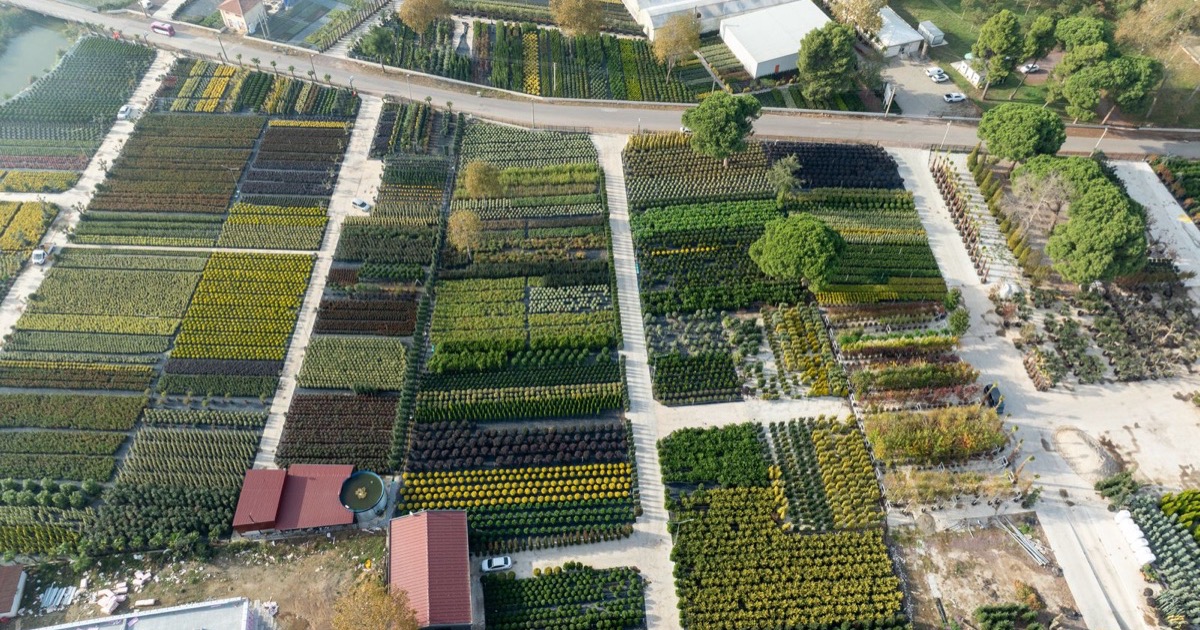
In the rural fringe surrounding Kusadasi, parcels of agricultural land are listed at prices well below the coastal premium. Villages such as Kirazli and Güzelçamlı host plots ranging from half a hectare to two hectares, often sold with existing fruit trees that can be retained or cleared for construction. Because these sites sit outside the primary tourist corridor, the initial outlay can be 30‑45 % lower than comparable villa plots on the shoreline.
Local zoning rules permit a transition from farming to residential use, provided the buyer obtains a change‑of‑use permit from the district municipality. The process typically involves submitting a site plan, proof of ownership, and a fee that reflects the new classification. Once approved, the land can support a custom‑built home with the freedom to incorporate traditional stone walls or modern design elements, while still benefiting from the tranquil countryside atmosphere.
Infrastructure upgrades are gradually extending to these outlying areas. Recent road resurfacing projects and the extension of high‑speed fiber optic lines have reduced the travel time to the city centre to under fifteen minutes. Access to municipal water and sewage is also improving, making the farm land a viable foundation for a permanent residence or a seasonal retreat.
How can I evaluate the potential ROI of land purchases in the Kusadasi region?
Assessing return on investment for Turkish land requires a blend of market data, regulatory awareness, and forward‑looking development trends. Begin by tracking the average annual price appreciation reported for the broader Kusadasi market, which has historically ranged between ten and twenty‑five percent. Compare this with the specific growth rates of the sub‑region you are interested in, such as coastal strips slated for new marina projects or inland zones earmarked for agritourism.
Next, factor in recurring costs that directly affect net returns. Property taxes in the Aegean province are calculated on the declared land value and typically amount to a modest percentage of that figure. Maintenance, utility connections, and any required zoning conversion fees should also be included in the cash‑flow model. Finally, project realistic exit scenarios—whether resale to another foreign buyer, lease to a tourism operator, or development of a small resort—and align them with anticipated market demand.
- Analyze recent transaction data from reputable listings to gauge baseline price trends.
- Verify the land’s zoning classification and any pending municipal plans that could alter permissible uses.
- Calculate annual property tax obligations based on the latest valuation tables published by the provincial tax office.
- Estimate infrastructure investment needs, such as road access improvements or utility hookups.
- Model cash‑flow scenarios that incorporate potential rental income, resale premiums, or development profits.
- Consider currency risk and the impact of exchange‑rate fluctuations on the final return.
- Review the legal framework for foreign ownership, including any reciprocity agreements that may affect repatriation of profits.
Which real estate agencies specialize in land sales near Kusadasi for foreign buyers?
Several firms have built a reputation for handling land transactions with an emphasis on foreign clientele. These agencies maintain bilingual staff, offer assistance with the Turkish Land Registry (Tapu) procedures, and often partner with local lawyers to streamline the legal process. Their portfolios include everything from coastal parcels ready for luxury development to agricultural plots suitable for eco‑friendly projects.
Clients typically appreciate agencies that provide comprehensive pre‑purchase services, such as site visits, feasibility studies, and guidance on obtaining the necessary residency permit for property ownership. By working with a specialist, foreign investors can navigate the Turkish foreign‑investor legal framework more confidently, ensuring that title searches, tax registrations, and zoning approvals are completed without unexpected delays.
When selecting an agency, verify its track record through client testimonials and the number of successful land deals completed in the past year. A firm that actively monitors Kusadasi infrastructure upgrades—such as the new highway link to Izmir and the expansion of the regional airport—will be better positioned to advise on locations that are likely to experience the strongest appreciation.
What taxes and fees should I expect when buying land near Kusadasi?
When you sign the purchase contract, a 4 % transfer tax is levied on the declared value of the land. This amount is split between the buyer and the seller unless you negotiate otherwise. In addition, a notary fee—typically ranging from 0.5 % to 1 % of the transaction price—covers the drafting of the deed and its registration in the land registry (Tapu). Both parties should also budget for a small municipal registration fee, usually a few hundred Turkish lira, which finalises the entry of the new owner into the local cadastre.
Annual property tax (Emlak Vergisi) is calculated on the official land value set by the tax office. For most parcels outside the urban centre, the rate sits at 0.1 % of that assessed value, payable in two installments each year. If the land is classified as agricultural, a separate agricultural tax may apply, but the amount is generally lower than the urban rate. Keep in mind that the tax office may reassess the land’s value every few years, potentially altering the yearly liability.
Foreign buyers should be aware of a possible value‑added tax (VAT) if the plot is sold by a developer as part of a new‑construction project. VAT is currently set at 18 % of the sale price, but it is only charged when the land is marketed as “new” and the seller is a VAT‑registered entity. Engaging a local attorney or a qualified real‑estate agent can help you verify whether VAT applies and ensure that all required documents are filed correctly.
How safe is it to invest in land near Kusadasi for long‑term capital growth?
The Aegean coast has attracted steady interest from both domestic and foreign investors for more than a decade, and Kusadasi remains a focal point because of its tourism infrastructure, international airport, and proximity to historic sites such as Ephesus. Recent municipal plans include upgrades to the coastal road network and the expansion of the marina, both of which tend to lift land values in adjacent zones. Historical price trends show an average annual increase of between ten and twenty‑five percent, suggesting that the market retains upward momentum when broader economic conditions are stable.
Risk factors are not absent. The Turkish real‑estate market can be sensitive to fluctuations in the lira, changes in foreign‑investment regulations, and shifts in tourism demand caused by global events. parcels classified as agricultural may face stricter building‑permit requirements, which could limit the speed at which you can develop the property. Conducting a thorough title search, confirming zoning designations, and consulting a local legal professional are essential steps to mitigate these uncertainties.
Investors who adopt a diversified approach—combining land purchases with other asset classes such as rental villas or commercial spaces—often achieve more resilient portfolios. By selecting locations that already benefit from existing utilities, road access, and proximity to schools or health centres, you increase the likelihood that the land will remain attractive to future buyers, even if macro‑economic conditions shift.
Sources & Further Reading
Frequently Asked Questions
Can non‑Turkish citizens buy land directly in the Kusadasi area?
Yes, foreign nationals are permitted to purchase land in Turkey, including the Kusadasi region, provided the property is not situated within a military zone or a restricted coastal strip. The buyer must obtain a tax identification number and open a Turkish bank account to complete the transaction. A power of attorney is often used when the buyer cannot be present for the signing, but the deed must ultimately be registered in the buyer’s name.
What is the average price per square meter for land near Kusadasi in 2026?
In 2026, market listings show a broad range depending on location and zoning. Plots within the immediate suburbs of the town centre typically trade between €150 and €250 per square meter, while agricultural parcels farther inland may be priced between €80 and €130 per square meter. Coastal plots with sea‑view potential command higher premiums, often exceeding €300 per square meter.
How long does the land purchase process take in Turkey?
From the initial agreement to the final registration of the title deed, the process usually spans four to six weeks. The timeline includes contract negotiation, the buyer’s tax number registration, payment of the deposit, notarisation of the sale contract, payment of transfer tax, and the official entry of the new owner into the land registry. Delays can occur if the seller’s title is unclear or if municipal permits are required for the intended use.
Are there any restrictions on building a villa on agricultural land near Kusadasi?
Building a residential villa on land classified as agricultural is possible, but it requires a change of land use (zoning) approved by the local municipality. The authority evaluates factors such as the plot’s size, proximity to existing infrastructure, and environmental impact. If the request is denied, the buyer may need to retain the land for agricultural purposes or consider purchasing a parcel already designated for residential development.
Which neighborhoods near Kusadasi are expected to see the highest appreciation?
Areas that have benefited from recent infrastructure projects—such as the new highway extension toward the Çeşme peninsula and the upgraded marina district—are projected to experience strong price growth. Neighborhoods like Alacati‑Kusadasi, the western fringe of Güzelçamlı, and the emerging residential zone around Kirazlı village have attracted attention from developers and are frequently cited as high‑potential zones.
What documents are required to complete a land purchase in Kusadasi?
The essential paperwork includes the seller’s title deed (Tapu), a notarised sales contract, the buyer’s tax identification number, proof of payment for the deposit and transfer tax, and a recent cadastral map of the parcel. Foreign buyers must also present a passport copy and, if applicable, a power of attorney. The notary will compile these documents before submitting the registration request to the land registry office.
How do I calculate the expected return on investment for Kusadasi land?
Begin by estimating the future resale price based on recent comparable sales and projected appreciation rates for the specific zone. Subtract the total acquisition cost—including purchase price, taxes, fees, and any development expenses—from the projected sale price. Divide the net profit by the total investment and multiply by 100 to express the result as a percentage. Adjust the calculation for holding costs such as annual property tax and any financing charges if a loan is used.
Is it necessary to hire a local lawyer when buying land near Kusadasi?
While not legally mandatory, engaging a qualified Turkish attorney is strongly advised. A lawyer can verify the title’s authenticity, ensure that there are no liens or encumbrances, confirm zoning compliance, and guide you through the tax and registration procedures. Their involvement reduces the risk of costly disputes and streamlines the paperwork, especially for foreign investors unfamiliar with local regulations.
What are the typical closing costs associated with land transactions in Kusadasi?
Closing costs generally comprise the 4 % transfer tax, notary fees (0.5 %–1 % of the sale price), a municipal registration fee, and a modest land registry entry fee. Buyers may also incur translation costs for documents, a lawyer’s fee (often 1 %–2 % of the transaction value), and, if financing is involved, a loan‑origination fee charged by the bank. Altogether, these expenses usually amount to 6 %–8 % of the purchase price.
Can I finance the purchase of land near Kusadasi through Turkish banks?
Turkish banks do offer mortgage products for land acquisition, but the terms are typically more favourable for residential properties rather than raw plots. Interest rates can range from 12 % to 18 % annually, and the loan‑to‑value ratio may be limited to 50 %–70 % of the appraised value. Providing a solid credit history and a sizable down payment improves the likelihood of approval.
Before committing, compare the total cost of ownership—including taxes, fees, and financing charges—to your projected returns, and consider engaging local professionals to navigate the process efficiently. This approach helps you protect your capital while positioning the investment for future growth.
Plan your trip
Book Istanbul attraction tickets
Skip-the-line tickets and guided tours for Istanbul's top sights, with mobile tickets and flexible cancellation.
See tickets on TiqetsWe may earn a commission from bookings made through this link, at no extra cost to you.
Reviewed by our editor for Türkiye & the Eastern Mediterranean
Elif DemirTürkiye & Eastern Mediterranean Editor
Travel writer covering Türkiye and the Eastern Mediterranean, from Istanbul's old city to the Aegean coast.
More articles by Elif Demir →